
Stewart Copeland on Film Scoring, Creative Control and Life After the Biggest Band in the World
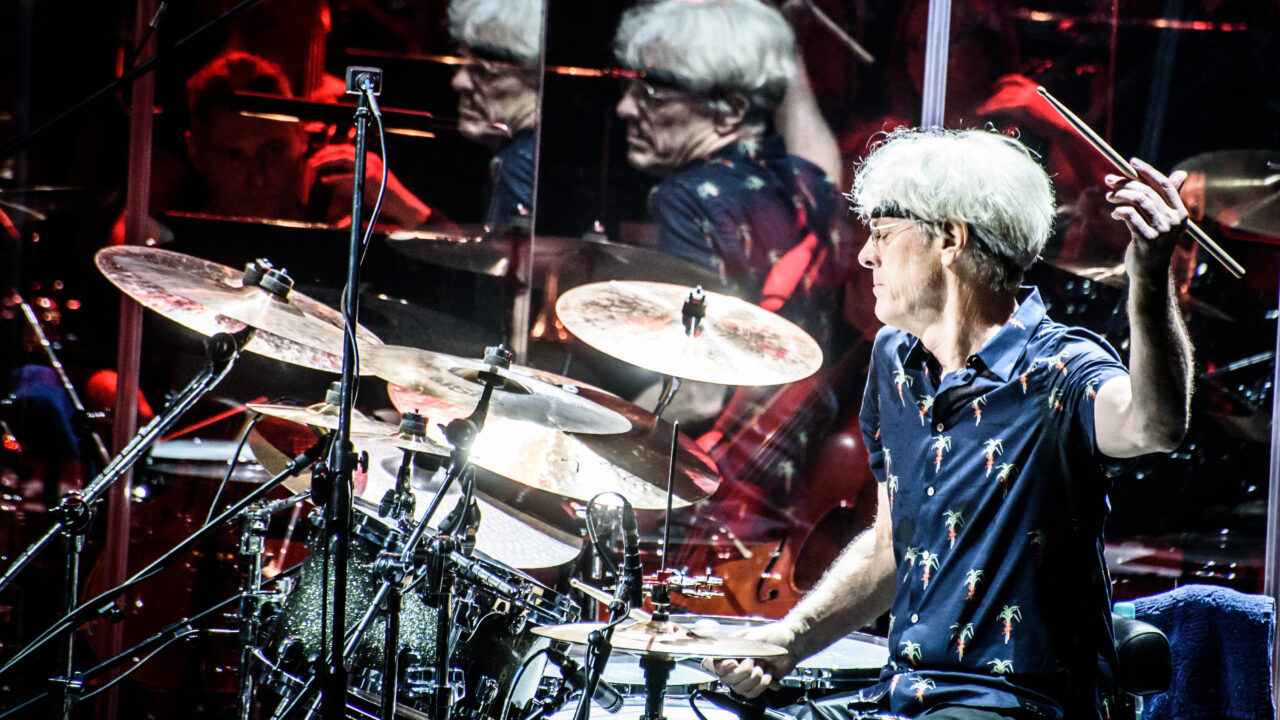
Stewart Copeland’s post–Police career is not a footnote — it’s a second act built inside the machinery of Hollywood.
While he remains best known as the co-founder and drummer of The Police, Copeland has spent decades establishing himself as a screen composer across film, television and interactive media, working at the intersection of pop instinct and narrative craft. His credits include feature films such as Wall Street (1987), She’s Having A Baby (1988), Men at Work (1990) right through to 2021’s Under The Volcano. These sit alongside television themes The Equalizer, The Amanda Show and Dead Like Me; and music for video games such as the Spyro series and Alone in the Dark: The New Nightmare. Alongside this, he has written extensively for ballet, opera and orchestra.
That breadth is central to Copeland’s upcoming spoken-word tour, Have I Said Too Much? The Police, Hollywood & Other Adventures, which brings him to Australia and New Zealand in early 2026. The show functions less as nostalgia and more as a career deconstruction — tracing how a drummer known for velocity and volatility adapted his instincts to the demands of narrative storytelling.
“I escaped from Hollywood and the high pay,” Copeland says, only half in jest. “I took a severe pay cut to do opera. Because it’s cool.”
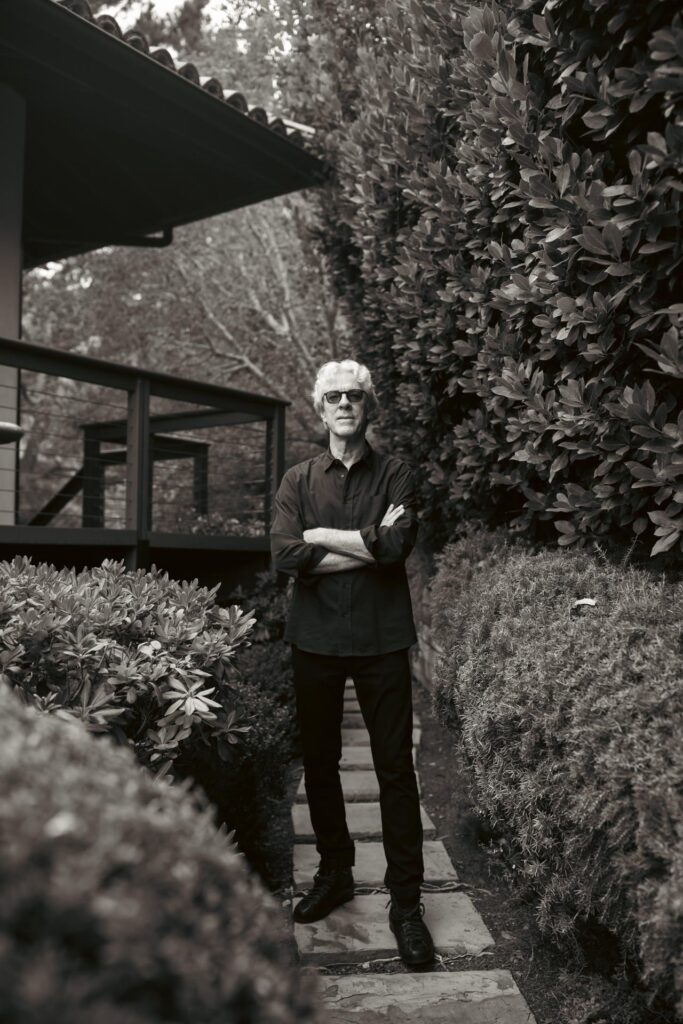
Copeland’s entry into film scoring came early, with Francis Ford Coppola offering him his first major opportunity on Rumble Rish in 1983. Rather than technical direction, Coppola spoke in emotional terms. “He didn’t tell me what instruments to use,” Copeland recalls. “He told me how he wanted to feel.” That distinction became foundational. “Film music tells you how to feel about what you’re seeing,” he says. “That relationship between music and storytelling is deep and profound.”
Across more than two decades, Copeland developed fluency in orchestration, dramatic pacing and what he candidly calls “emotional manipulation.” Unlike rock recording, where spontaneity ruled, film demanded discipline and precision. “A Police album might take weeks,” he says. “A film score gets recorded in one day. Everything is on the page.”
That process reshaped his musicianship. Writing for orchestra — a skill rarely mastered by rock artists without formal conservatory training — became a core part of his identity. Today, Copeland regularly composes for symphonic ensembles, ballet and opera, crediting his years in film as an “involuntary education” that expanded his creative range far beyond the drum kit.
The tour also reframes The Police through an industry lens. Copeland discusses the band’s famously rapid recording method — drum parts often captured minutes after hearing a song — and the tension between instinct and authorship. “Whatever I played in those three minutes is what’s on the record forever,” he says. “It wasn’t intellectual. It was instinct.”
That ethos clashed productively with Sting’s songwriting, particularly on Every Little Thing She Does Is Magic. After multiple attempts to rework the song diluted its impact, Copeland recalls reluctantly playing the demo as written. The resulting take became definitive. “Both of us annoyed,” he says. “That was the Police formula.”
The band’s decision to stop at its commercial peak is presented not as myth but as structural inevitability. “We never saw the other side of the parabola,” Copeland says. Attempts to record new material years later only confirmed how different the members’ creative motivations had always been. “Sting writes songs about something,” he says. “I provide propulsion.”
Copeland’s pragmatic outlook extends to contemporary music and technology. He rejects anxiety around AI and sampling culture, noting that drummers have been “fighting robots for 50 years.” What matters, he says, is emotional impact, not methodology — a perspective shaped as much by scoring Wall Street or Dead Like Me as by filling stadiums with The Police.
As Have I Said Too Much? arrives in Australia and New Zealand, the show positions Copeland not as a legacy act, but as a long-form creative thinker — one who has navigated rock stardom, Hollywood systems and classical composition without ever fully belonging to any single category.
It’s a portrait of an artist who kept moving — and learned how to make music work, wherever the story demanded it.
Sean Sennett
HAVE I SAID TOO MUCH? AUSTRALIA & NEW ZEALAND TOUR DATES 2026
Sunday, January 11 — Regal Theatre, Perth
Wednesday, January 14 — Forum 2, Melbourne
Friday, January 16 — State Theatre, Sydney
Saturday, January 17 — The Tivoli, Brisbane
Tuesday, January 20 — Opera House, Wellington
Wednesday, January 21 — Bruce Mason Centre, Auckland
Tickets & tour information:
www.birdsrobe.com