

Universities Begin Teaching Microdramas Amid Industry Boom
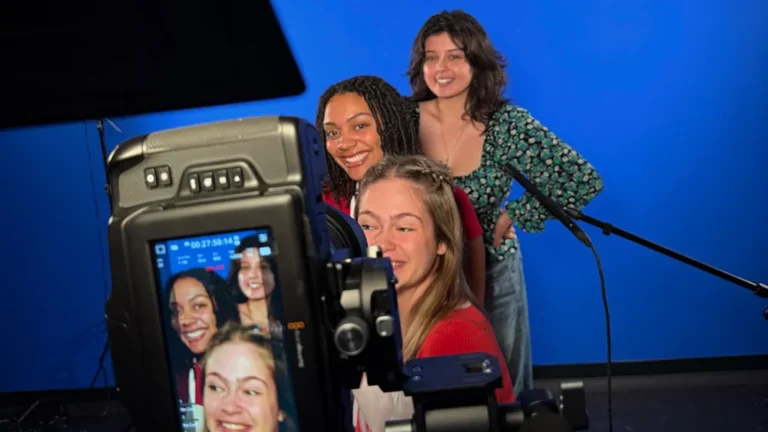
“A lot of our students have anxiety about how am I going to support myself when I leave here? And verticals seem to be the one industry right now that is booming, that’s growing,” said George Huang, a professor at UCLA.
As microdramas explode in popularity, screenwriting, film and acting professors are jumping on the trend.
Chapman’s Dodge College of Film and Media Arts in Orange, Calif. has incorporated microdramas into its writing for evolving mediums class, which also includes writing for podcasts, video games and more. UCLA has launched its inaugural Picture Start initiative, a series of extracurricular masterclasses, around the new medium. And the University of Cincinnati has begun teaching its students how to act in microdramas, including shooting and producing three so far.
This comes amid a production “gold rush” in Hollywood for microdramas, or verticals, as they’re otherwise referred to given that they’re meant to be viewed on cell phone screens. The series of often soap opera-like episodes, which are typically 60 to 90 seconds each, took off in China during the COVID-19 pandemic, but have since developed a U.S. presence thanks to platforms such as ReelShort and DramaBox and investment from major entertainment companies.
Professors are taking on the new programming to prepare students for another possible career path, amid a tough environment for traditional acting and writing jobs in Hollywood.
“A lot of our students have anxiety about how am I going to support myself when I leave here? And verticals seem to be the one industry right now that is booming, that’s growing,” said George Huang, a professor at UCLA’s school of theater, film and television.
As part of the University of Cincinnati’s Digital Performance Lab, students have shot a medical drama, a sitcom set in a midwest grocery store and the upcoming Diary of A High School Demon Hunter. D’Arcy Smith, a professor of voice and acting, began focusing his acting for the camera class on microdramas after speaking with recent grads from the program and finding that this is what they were auditioning for.
The demands of acting in a microdrama are far different than typical screen work, with actors needing to peg their performance to very short episodes with cliffhanger endings to encourage the viewers to watch the next episode.
“How do you create a memorable performance in 90 seconds? You don’t have a two-minute or three-minute scene to build your way up into it,” Smith said. Part of this, he says, includes being more theatrical and acting more through the body.
The scenes are then posted on TikTok, Instagram and YouTube and casting agents are also made aware of the episodes, which offers students a possible connection to the industry ahead of their senior showcases.
Still, because the trend is so emerging, one issue in developing the classes is the lack of resources or course guides to work off of. Michael Weiss, a lecturer at Chapman who is teaching screenwriting seniors how to write for verticals, as part of a broader course, said that he hadn’t heard of microdramas when he first began teaching in August, but began researching the topic as it began being mentioned in the media.
“Really in the past six months, it’s almost taken over AI as party conversation in Hollywood,” Weiss said.
To prepare for his class, Weiss reached out to employees at DramaBox for a guide on how to write for the medium and received their internal guide, which includes a “slightly mathematical formula” on how to script the episodes. Otherwise, he notes, he’s been “making it up on the fly,” adding that it’s been difficult to get a professional vertical drama script.
Students have also been watching microdramas and breaking them down, as well as hearing from writers for verticals. In addition to the cliffhanger endings, he’s also been advising students to only write for one location, as the verticals are typically low-budget shoots, and for multiple characters per scene.
“They all feel like somewhere between Twilight and a soap opera,” Weiss said. Still, he said he sees this as a viable entry level career for his seniors, comparing their trajectory to where “Hallmark was six years ago” in terms of rampant movie production.
At UCLA, verticals are being offered as an extracurricular through a new series of masterclasses, which provide students a different type of project each year in which to create new work. Thus far, the program has held a masterclass in writing verticals with an alum who has written for Dramabox and ReelShort. Next up will be a masterclass on producing and directing verticals. The program culminates with students shooting five-minute pilots over spring break, which are then presented in an industry showcase with the microdrama platforms in attendance.
Despite the apparent job opportunities, there is some discomfort around bringing verticals into traditional screenwriting and film curricula, with fears that it could be the final “nail in the coffin” for the film industry.
“Is it the most masterful storytelling? Yes and no. I’m sort of impressed at the platform’s ability to really distill it down to big emotional beats, every minute and a half, two minutes,” Huang said. However, he added that he believes the younger generation will have the opportunity to turn verticals into something more.
“If anyone can crack how to make this format artful and meaningful, it’s going to be them, because they were raised on this,” he said.
Neither Nikolai Gray nor Dinithi Fernando, current senior acting majors at the University of Cincinnati, were very familiar with verticals before joining the class. But Gray, who has shot three microdramas including one where he played a demon, which he notes is “not something that you’re normally asked to do at drama school,” and Fernando have both been enjoying the acting exercise.
“Since it’s so short and it’s on so many different apps where the algorithm is people swiping, I think it’s a type of medium where you need to make choices faster and from the top, just so you can hook people in, keep them hooked, so they don’t decide to swipe to the next video,” Fernando said.
Both plan to move to New York upon graduation and pursue acting careers in film, television, theater or more. They now see verticals as another possibility along the way.
“I don’t really have a lot of control over where the industry is going is,” Gray said. “But right now going into it, I feel really happy that I’ve had this experience in an educational environment, to be able to practice them because now I’m like, ‘Now, I know where this is where part of this industry is going, and I can be part of it.”