
‘Mortal Kombat II’ Stars Karl Urban, Jessica McNamee and Josh Lawson Enter the Arena: “Johnny Cage Is a Broken Man”
The Mortal Kombat II press junket on the Gold Coast had the energy of a cast reunion mixed with a convention green room. Publicists were running talent between interviews, recorders were being switched on in a hurry and, at one point, Karl Urban was discussing what it’s like to work opposite Robert Redford.
“It was trippy,” Urban says, recalling making Pete’s Dragon with the screen legend. “You’re doing a scene with him and suddenly you’re seeing five movies at once — Butch Cassidy, all those iconic Robert Redford moments. It’s surreal.”
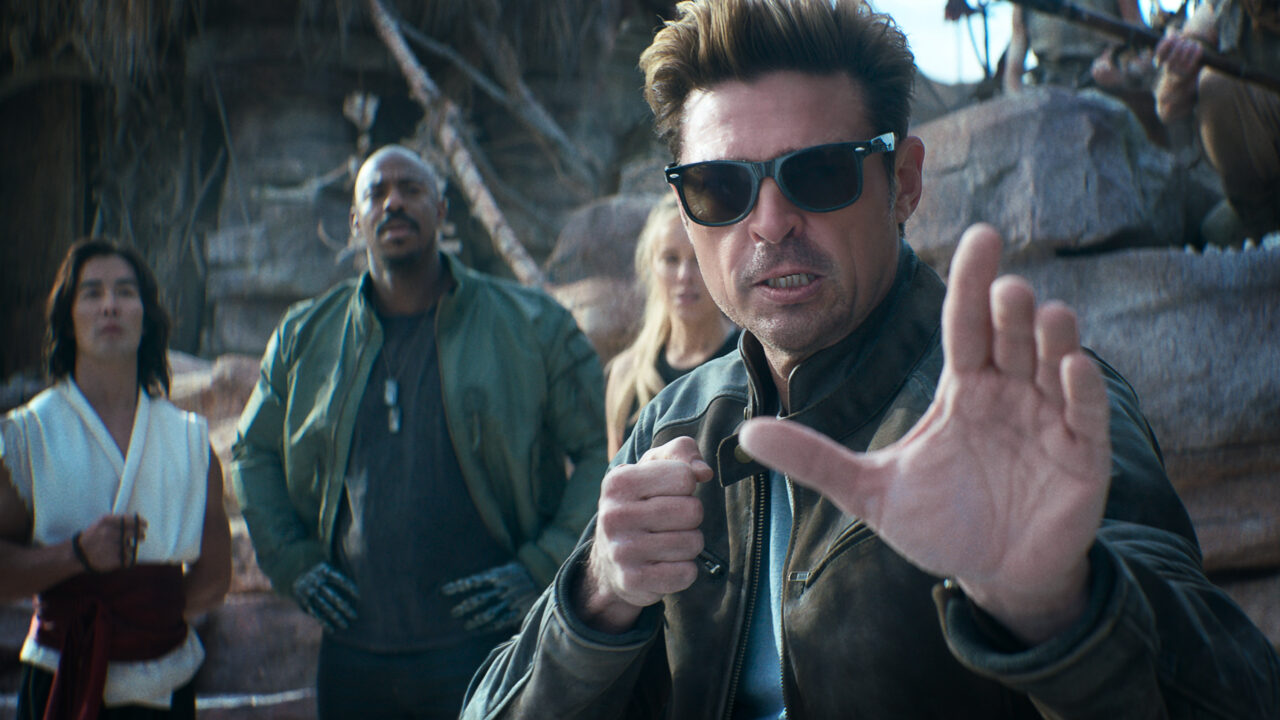
A few minutes later, Urban is talking about another icon: Johnny Cage.
The actor joins Mortal Kombat II as the swaggering martial arts movie star teased at the end of the 2021 film, stepping into one of the franchise’s most beloved roles. And while the sequel promises bigger fights, bloodier fatalities and an expanded mythology, Urban says the key to Johnny was vulnerability.
“When we discover Johnny in this movie, he’s a broken man,” Urban explains. “The world’s forgotten about Johnny Cage, and it’s at this very juncture that he gets called upon to be the best version of himself. I thought that was really smart writing.”
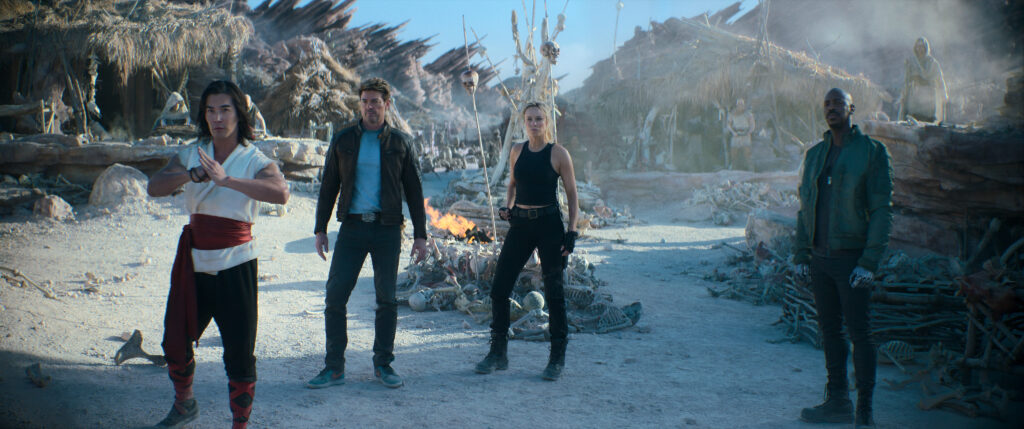
Directed once again by Simon McQuoid, the sequel expands the mythology of the blockbuster video game franchise, throwing Earthrealm’s champions into a brutal showdown against Shao Kahn. Returning cast members include McNamee as Sonya Blade and Lawson as Kano, alongside newcomers including Urban and Adeline Rudolph.
Urban says he immediately recognised tonal similarities between Johnny Cage and another cult favourite.
“There’s definitely a bit of a Galaxy Quest vibe,” he says with a grin. “You’ve got the convention stuff and this actor who’s living inside his own mythology. It was really fun to play a movie star within the movie.”
For Urban, the appeal went beyond the humour.
“What I look for is a character with a strong arc,” he says. “Someone who not only goes on a journey himself but takes the audience on that journey too.”
The actor had just wrapped season four of The Boys when the opportunity arrived.
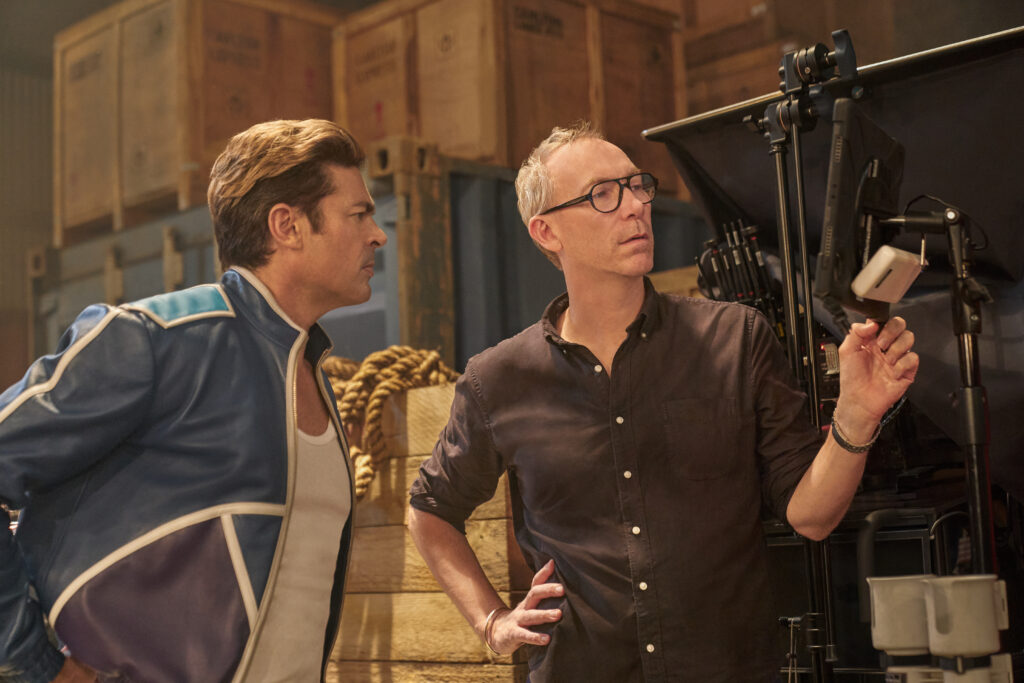
“I remember getting to the end of the season and thinking, ‘I’ve still got energy in the tank,’” he says. “So I told my reps, ‘If there’s something out there with action in it, I’m down.’ Then suddenly it was, ‘Johnny Cage?’ Are you kidding me?”
Still, the role proved more physically demanding than expected.
“The technical skill set required was leaps and bounds above what I’d been doing,” Urban says. “It was a huge challenge — but a fun challenge.”
That physicality is something McNamee knows well. Returning as Sonya Blade after the first film, she says the sequel allowed her character to evolve from outsider to fully fledged member of the team.
“In the first film I was kind of on the outer a little bit,” McNamee says. “This time I got to join the crew properly, which was really fun.”
The sequel also gave Sonya access to more of the franchise’s signature powers and weaponry.
“My arcana did a lot of the heavy lifting this time,” she laughs. “In the first one I was kind of chasing people around trying to get my powers. This time I could just use them.”
McNamee says the production schedule allowed far more time for physical preparation than the first film.
“The first movie happened really quickly,” she says. “This time we had about three or four months’ lead time, so I was in the gym constantly.”
Lawson, meanwhile, returns as Kano with what he jokingly describes as an even stronger “beard game.”
“The beard really does most of the heavy lifting,” he deadpans.
But Kano almost never happened for him. Lawson initially believed he was entirely wrong for the role.
“At that point, Marvel had burst onto the scene and there was this idea of what an action star looked like,” he says. “I genuinely thought, ‘Let’s not waste each other’s time.’”
His agents convinced him to audition anyway.
“Months went by and I’d honestly forgotten about it,” Lawson recalls. “Then suddenly I got the call.”
According to Lawson, McQuoid’s vision for Kano was far less conventional than expected.
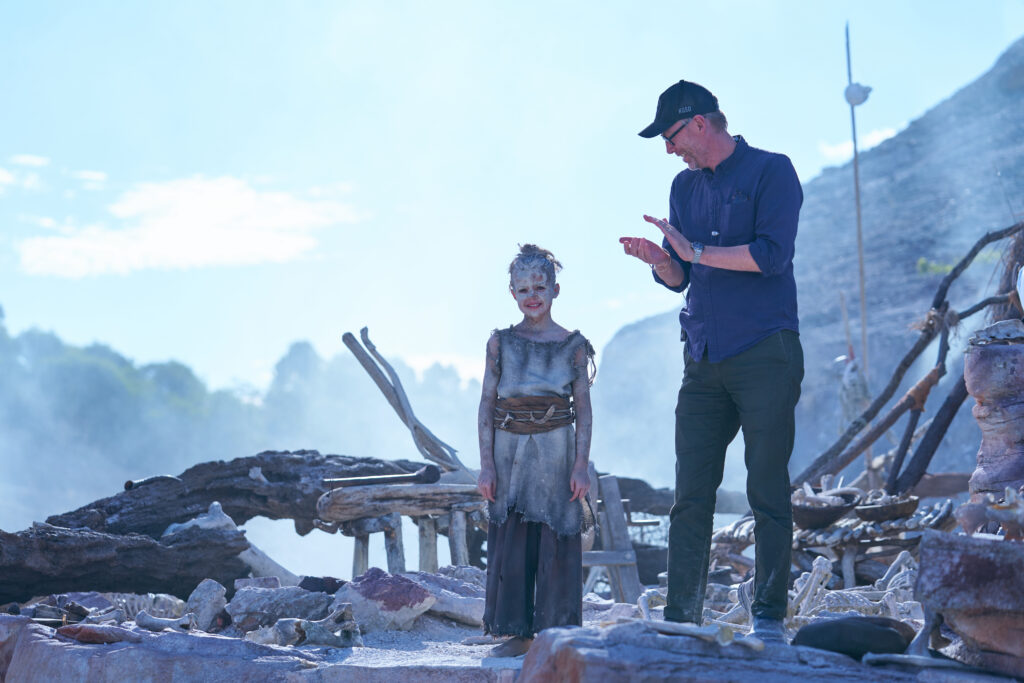
“Simon wanted to lean into authenticity, realism and practical effects,” he says. “He saw Kano in a way that made me more appropriate for it than I initially saw myself.”
That grounded approach extends across the sequel, despite its sprawling mythology and multiple dimensions.
“It’s funny because people ask questions and you’re like, ‘Wait, what world was I in again?’” McNamee says, laughing.
Lawson agrees that Mortal Kombat occupies an increasingly popular fantasy space.
“There’s this whole subgenre now of multi-dimensional worlds layered on top of each other,” he says. “And I honestly think we’ve only scratched the surface of what exists in the Mortal Kombat universe.”
One figure who continues to anchor that universe is Hiroyuki Sanada, returning as Scorpion. Urban speaks about him with visible admiration.
“He brings this incredible steely gravitas,” Urban says. “He’s just a joy to work with — very professional, very generous.”
For a film built around supernatural tournaments, fractured dimensions and brutal combat, it’s striking how often the cast return to the same idea: character.
Yes, Mortal Kombat II promises bigger action and more elaborate worlds. But beneath the fatalities and spectacle, Urban believes the sequel works because the fighters themselves still have something deeply human to prove.
“That’s what gives the audience something to hold onto inside all the madness,” he says.
Mortal Kombat II is in cinemas now.