

Suzy Eddie Izzard Wants to Conquer Hamlet — One Character at a Time
By the time Suzy Eddie Izzard logs onto Zoom from a luxury hotel at Brisbane’s South Bank, the absurdity of modern touring has already struck them.
“We could have just met for a cup of tea,” Izzard laughs. “We’re bouncing off satellites and you’re just down the road.”
That mix of surreal humour, philosophical curiosity and restless ambition has defined Izzard’s career for nearly four decades. From the anarchic stand-up brilliance of Dress to Kill and Glorious to acclaimed dramatic turns in films like Valkyrie, Ocean’s Twelve and the underseen wartime drama Six Minutes to Midnight, Izzard has built a career on refusing categories.
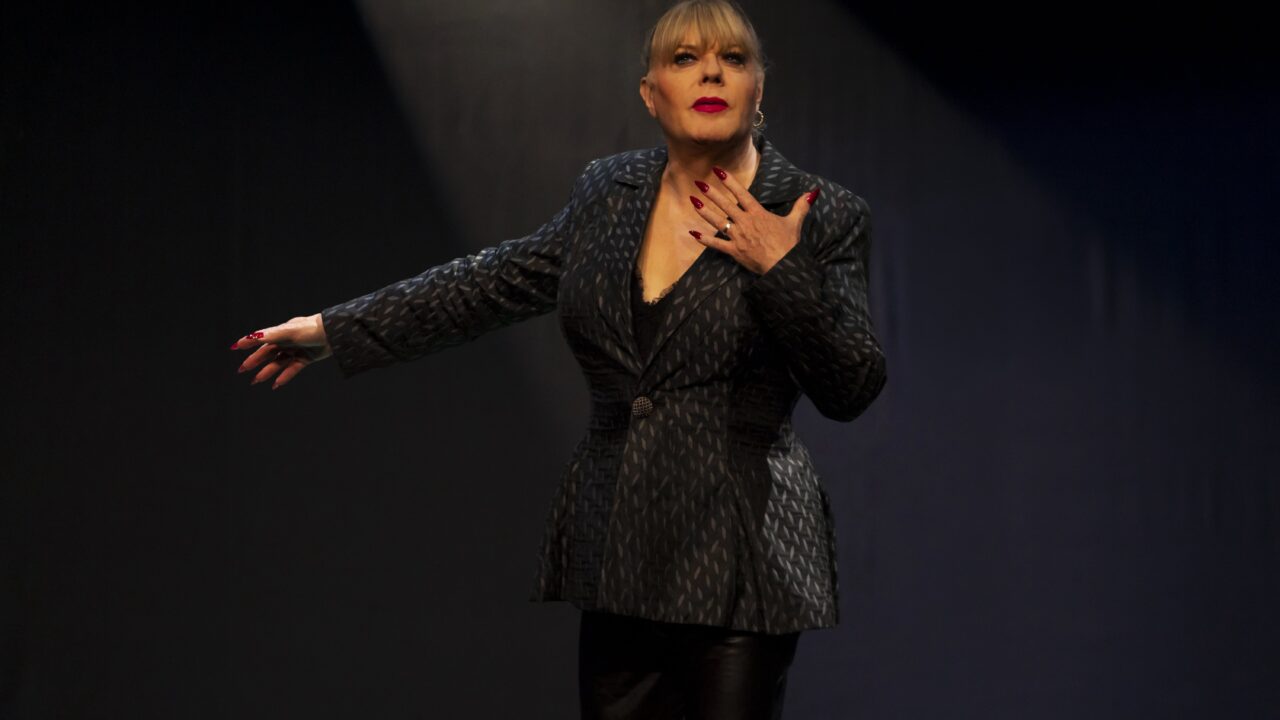
Now they may be taking on their boldest challenge yet: a one-person production of Hamlet, performing 22 characters and every major soliloquy entirely alone onstage.
It sounds impossible. Which is precisely why Izzard wanted to do it.
“I realised I’m just following Shakespeare’s footsteps,” they say. “He started in comedy and moved into dramas and tragedies — and so have I.”
The Australian tour arrives after Izzard’s acclaimed performances in New York, London and Chicago, where critics praised the production as “a Hamlet for our times.” More than 250 performances in, the show has become something larger than a theatrical experiment. It’s become a statement about reinvention, endurance and artistic freedom.
“People say, ‘Why not do it with other actors?’” Izzard explains. “And that would be great. But I knew I wasn’t top of the list of people Hollywood or theatre producers would naturally say, ‘Let’s build a Hamlet around this person.’ So I thought — fine — I’ll build it myself.”
That DIY instinct runs deep. Long before fame, before sold-out arenas and Emmy nominations, Izzard was learning performance skills busking on the streets of London’s Covent Garden — only a short distance from where Shakespeare’s own actors once performed.
“There was no fourth wall back then,” they say. “The audience and actors were connected directly. So in our production, we break that wall completely.”
It’s also part of why the one-person format works. Stripped of elaborate staging and theatrical clutter, Shakespeare’s language becomes startlingly immediate.
“You really focus on the words,” Izzard says. “The beauty of Shakespeare. The characters. The emotional drive.”
That emotional drive has become a recurring theme in Izzard’s career. Whether discussing theatre, politics, gender identity or endurance running, they constantly return to the idea of pushing beyond perceived limitations.
“I think when we’re children we’re all creatively fearless,” they say. “Then people start telling us, ‘No, you can’t do that. Stay in your lane.’ I don’t believe that. We should all keep challenging ourselves.”
Few people embody that philosophy more literally than Izzard. Over the past decade they have completed an astonishing 130 marathons, including 43 marathons in 51 days around the UK and 27 marathons in 27 consecutive days across South Africa in tribute to Nelson Mandela.
“I wasn’t an athlete,” they insist. “That’s the important thing.”
The marathons, they say, weren’t really about sport. They were about stamina — physical, emotional and psychological.
“That’s the thing people don’t understand. Once you’ve done difficult things before, something like Hamlet doesn’t feel impossible anymore.”
That same stubborn determination helped Izzard survive the long years before success arrived. Like one of their heroes, David Bowie, Izzard spent more than a decade struggling before breaking through.
“He struggled for 11 years before he took off,” Izzard says. “And so did I. I always connected with that.”
The Bowie influence extends beyond perseverance. There’s a shared instinct toward reinvention — a refusal to become trapped by past success.
“You don’t want people saying, ‘Oh yes, 20 years ago you did something interesting,’” they say. “You want to keep moving.”
That movement has taken Izzard across wildly different creative territories: stand-up comedy, Broadway, political activism, marathon running, dramatic acting and now Shakespearean tragedy.
The theatrical breakthrough came with their solo adaptation of Great Expectations, which transferred from New York to London’s West End and demonstrated that audiences were willing to follow Izzard far beyond comedy.
“Doing Great Expectations made me realise I could do Hamlet this way,” they say.
The production also represents another evolution in public identity. Now performing professionally as “Suzy Eddie Izzard,” they describe themselves as “gender fluid,” while remaining relaxed about pronouns.
“No dead names,” they say cheerfully. “I’ve just added Suzy at the front. I’ve become a three-name person.”
It’s all delivered with characteristic warmth and wit, but underneath lies a deeply considered philosophy about self-determination.
“It’s your life,” they say. “Change the bits that aren’t working for you.”
That philosophy extends into spirituality as well. Izzard describes themselves as a “spiritual atheist,” rejecting organised religion while maintaining a profound belief in humanity.
“One life. Live it well,” they say simply.
For all the ambition surrounding Hamlet, there’s still something wonderfully punk-rock about Izzard’s approach. They remain, at heart, the teenager who once broke into London’s Pinewood Studios at age 15 hoping somebody might randomly cast them in a film.
“I marched around like I belonged there,” they laugh. “I hadn’t really worked out the rest of the plan.”
Suzy Eddie Izzard’s Hamlet is touring nationally through June, July and August. https://www.eddieizzardhamlet.com/schedule