
Melbourne International Film Festival 2026: Cinema Without Borders
74 Years Young
For 74 years, the Melbourne International Film Festival has occupied a singular place in Australian cultural life. It is our oldest film festival, our largest, and increasingly one of the Southern Hemisphere’s most significant cinematic events. Yet what makes MIFF endure is not simply longevity. It is the festival’s remarkable ability to exist simultaneously as a showcase for world cinema, a launchpad for Australian filmmakers, an industry gathering point and a celebration of moviegoing itself.
When MIFF returns to Melbourne from August 6–23, before extending nationally via MIFF Online until August 30, it arrives with considerable momentum. The 2026 edition promises more than 300 titles, major international guests, world premieres, local discoveries and one of the most substantial prize pools in world cinema. It also arrives at a moment when cinema itself is experiencing renewed energy.
“We’re thrilled to share these First Glance titles as an early taste of what to expect when MIFF returns to Melbourne screens this winter,” says MIFF Artistic Director Al Cossar.
“From the year’s most anticipated films to bold new voices and discoveries, this selection offers a glimpse of the festival to come: a world on screen, alongside the very best in new Australian storytelling.”
Australian Stories Front and Centre
One of the strongest themes emerging from the early announcement is MIFF’s continuing commitment to Australian filmmaking.
Nearly twenty years after its establishment, the MIFF Premiere Fund remains one of the country’s most important film financing initiatives. The fund has supported more than 100 Australian features, and its 2026 selections demonstrate both ambition and diversity.
Among them is Mad Rush, Maddelin McKenna’s Melbourne-set urban thriller that transforms the CBD into a disorientating psychological landscape. Sweet Milk Lake, from Harvey Zielinski, offers an intimate and deeply personal exploration of identity through the story of a young trans man returning to his hometown. Arlo Dean Cook’s Jebediah: Are We OK? chronicles one of Australia’s most beloved alternative bands, while Hard as Puck follows a Perth para ice hockey team battling both sporting odds and bureaucratic obstacles.
Elsewhere, Digby & Camille offers a tender portrait of a couple living with Down syndrome, while Death of a Shamanexplores Indigenous communities in the Ecuadorian Amazon confronting environmental destruction.
Collectively, these films reveal a local industry increasingly comfortable telling stories that are intimate, diverse and distinctly Australian.
The World Comes to Melbourne
If Australian cinema forms one pillar of MIFF, international cinema remains the other.
Among the major international titles announced is Minotaur, the latest work from exiled Russian director Andrey Zvyagintsev. Fresh from winning the Grand Prix at Cannes, the film marks the acclaimed filmmaker’s first feature since Loveless in 2017.
Sandra Hüller returns to the festival in Rose, a historical drama that earned the actress the Silver Bear for Best Leading Performance at Berlin.
Gus Van Sant’s Dead Man’s Wire arrives with a formidable cast including Bill Skarsgård, Al Pacino, Colman Domingo and Dacre Montgomery. Meanwhile, Japanese master Kiyoshi Kurosawa unveils his latest work, The Samurai and the Prisoner, while Clio Barnard’s I See Buildings Fall Like Lightning examines the economic realities confronting contemporary Britain.
These films continue MIFF’s longstanding tradition of bringing international cinema to Australian audiences long before many titles receive commercial release.
Television Takes Centre Stage
One of the most intriguing additions to the program is the world premiere of The Airport Chaplain, an SBS drama series created by Elise McCredie and Jude Troy.
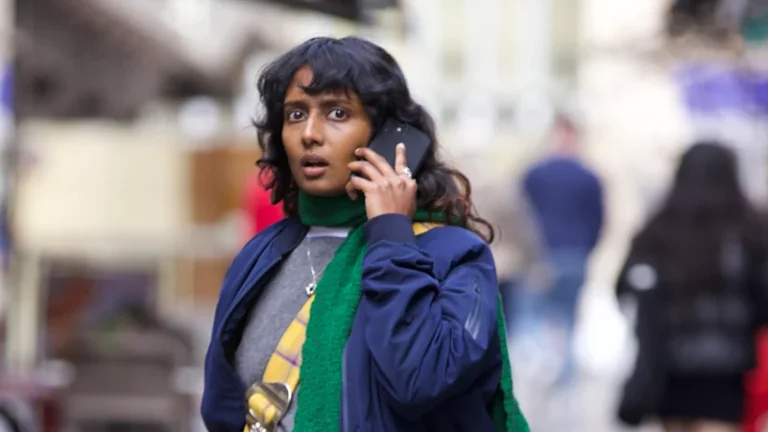
Set inside Melbourne Airport, the series stars Hugo Weaving as a chaplain navigating the emotional turbulence of one of Australia’s busiest transit hubs. Shabana Azeez, Thomas Weatherall and Claudia Karvan also feature.
The inclusion of prestige television reflects the increasingly fluid relationship between cinema and long-form storytelling.
Music, Memory and Nostalgia
Music plays a significant role throughout this year’s festival.
The Best Summer revisits the 1995 Summersault tour through previously unseen footage discovered by filmmaker Tamra Davis during the Los Angeles wildfires. Featuring the Beastie Boys, Pavement, Sonic Youth, Foo Fighters and Bikini Kill, the documentary captures an alternative music scene on the cusp of global success.
Closer to home, Jebediah: Are We OK? explores the highs and lows of one of Australia’s defining independent bands.
These works reflect MIFF’s growing interest in music culture and the ways popular music intersects with memory, identity and community.
Special Events
Among the most anticipated events is the arrival of John Cameron Mitchell.
The writer, director and star of Hedwig and the Angry Inch will appear in person for a special 25th anniversary screening of the film, offering live commentary alongside a new 4K restoration.
Christopher Nolan’s Memento also receives a unique reimagining through the Hear My Eyes series, with a contemporary artist providing a live score to accompany the restored classic.
Such events have become an increasingly important part of MIFF’s identity, transforming film screenings into communal experiences.
Beyond Melbourne
While the festival remains firmly rooted in Melbourne, its reach continues to expand.
MIFF Regional will once again travel to Bendigo, Ballarat, Castlemaine, Geelong, Healesville, Rosebud, Sale and Warrnambool, bringing festival selections and filmmaker appearances to regional audiences.
Meanwhile, MIFF Online extends the event nationally through ACMI’s Cinema 3 platform, allowing audiences across Australia to participate.
The Future of the Festival
The MIFF Awards remain among the richest in world cinema, headlined by the $140,000 Bright Horizons Award.
Yet perhaps the festival’s greatest achievement lies elsewhere.
In an era of streaming, algorithms and endless content, MIFF continues to champion discovery. It remains a place where audiences can stumble upon an unknown filmmaker, encounter unfamiliar cultures or see their own experiences reflected on screen.
As the festival prepares to unveil its full program in July, MIFF finds itself in an enviable position. It remains both a celebration of cinema’s history and a glimpse of its future.
For 18 days every August, Melbourne becomes one of the world’s great movie cities. In 2026, that tradition appears stronger than ever.