
MIFF 2026: Melbourne’s Winter Movie Obsession Returns Bigger Than Ever
For 18 days each August, Melbourne becomes the closest thing Australia has to Cannes.
Long before many of this year’s most talked-about films reach cinemas or streaming platforms, they will first find an audience inside the Melbourne International Film Festival. This year’s 74th edition feels particularly ambitious, with more than 300 feature films, documentaries, shorts and immersive XR experiences transforming the city into a global crossroads for cinema. Running from August 6–23, with MIFF Online extending nationally until August 30, the festival once again demonstrates why it remains Australia’s most influential celebration of film culture.
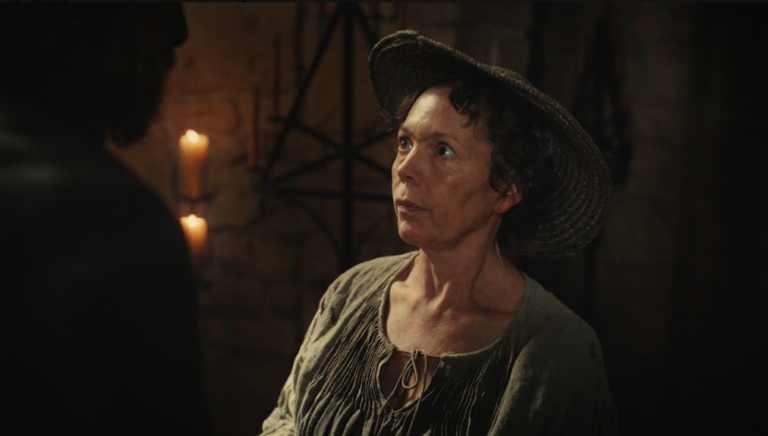
Opening Night belongs to Wicker, an audacious Australian production that arrives in Melbourne after its Sundance premiere. Directed by filmmaking partners Eleanor Wilson and Alex Huston Fischer, the film boasts a formidable cast including Olivia Colman, Alexander Skarsgård, Peter Dinklage, Richard E. Grant and Elizabeth Debicki. Adapted from Ursula Wills-Jones’ short story and produced by MIFF Accelerator alumnus David Michôd, Wicker also competes in MIFF’s prestigious Bright Horizons competition, immediately signalling the festival’s commitment to championing emerging filmmakers alongside established names.
That commitment extends throughout the program. The Bright Horizons Award, now worth an extraordinary $140,000, has quietly become one of the richest prizes for first and second-time feature directors anywhere in the world. Together with MIFF’s overall awards pool of more than $300,000, it reinforces the festival’s increasingly important role as a launchpad for new voices rather than simply a showcase for finished work.
Internationally, the line-up reads like a tour through the world’s major festivals. Pedro Almodóvar returns with Bitter Christmas, Gus Van Sant brings the blackly comic thriller Dead Man’s Wire, while Paweł Pawlikowski’s Fatherland, Rodrigo Sorogoyen’s The Beloved, Ira Sachs’ The Man I Love and Lukas Dhont’s Coward continue MIFF’s long tradition of presenting acclaimed auteurs alongside the next generation of filmmakers. Meanwhile, performances from Sandra Hüller, Javier Bardem, Rami Malek, Maya Hawke, Lewis Pullman and Olivia Wilde ensure plenty of star power throughout the program.
Australian cinema remains equally prominent.
The MIFF Premiere Fund unveils six new Australian features, ranging from the intimate documentary Digby & Camille to the Melbourne-set Mad Rush, Harvey Zielinski’s Sweet Milk Lake, the music documentary Jebediah: Are We OK?, Death of a Shaman and Hard as Puck. They represent the breadth of Australian storytelling, spanning documentary, drama, music and sport while reinforcing MIFF’s commitment to developing local production.
Elsewhere, Australian audiences will discover new local work including Wilderness, Phillip Philadelphia, French Girls, The Fox, Sentient, Time and Tide and Replica, while Indigenous voices continue to grow in prominence through projects such as Facing the Numbers.
Music lovers are particularly well served this year.
The Music on Film strand includes the world premiere of Tina Arena: Unravel Me, offering an intimate portrait of one of Australia’s most enduring performers, alongside documentaries celebrating Marianne Faithfull, Bill Evans, outsider legends The Shaggs and the culture surrounding the Grateful Dead.
Documentary remains another festival strength.
Highlights include Adam’s Apple, chronicling one young trans man’s journey over eight years; The Siege of Paradise, examining overtourism in Italy’s Cinque Terre; Rehearsals for a Revolution, exploring decades of Iranian resistance; and Kim Novak’s Vertigo, an intimate portrait of the legendary Hollywood star that promises to reframe one of cinema’s most enduring screen icons.
One of the festival’s biggest coups comes through its retrospective programming.
Kim Novak receives a major season celebrating one of Hollywood’s last surviving Golden Age stars, while Argentine master Lisandro Alonso is honoured with an extensive retrospective. Australian filmmaker Sarah Watt also receives a long-overdue spotlight, with Look Both Ways, My Year Without Sex and a collection of her acclaimed short films returning to the big screen.
Beyond the films themselves, MIFF continues to evolve into a broader cultural event.
John Cameron Mitchell celebrates the 25th anniversary of Hedwig and the Angry Inch, Footy Shorts returns in partnership with the AFL, and this year’s program introduces the inaugural Sovereign Shorts Gala. Armani Beauty also joins the festival as a major new partner, presenting both the Cinema Club strand and the Shorts Awards, reflecting MIFF’s growing international profile and commercial confidence.
Perhaps the greatest achievement of MIFF isn’t simply the calibre of films it attracts, but the experience it creates. For nearly three weeks each winter, Melbourne becomes a city where audiences queue around blocks, filmmakers debate cinema in laneways, and discoveries made in packed theatres frequently become the films everyone is talking about months later.
In an era increasingly dominated by streaming algorithms and home viewing, MIFF remains one of the rare places where cinema is experienced as a communal event. The films may come from every corner of the world, but for 18 days in August, they all belong to Melbourne.