
From Maharajas to Hollywood: How Cartier Became a Global Icon
From Grace Kelly and Elizabeth Taylor to Ocean’s 8 and Maria, the National Gallery of Victoria’s landmark Cartier exhibition reveals how the legendary jeweller evolved from adorning royalty to becoming one of Hollywood’s enduring stars.
There is a moment in the National Gallery of Victoria’s remarkable new Cartier exhibition when the story suddenly changes.
For several galleries, visitors journey through the worlds of kings, queens, maharajas and European aristocracy. Ancient Egypt, India, Art Deco Paris and the ateliers of Cartier unfold in dazzling succession. Then, projected in glorious Super 8, there is Elizabeth Taylor by a swimming pool.
The image is radiant. Taylor is young, impossibly glamorous and wearing the ruby and diamond necklace given to her by her third husband Mike Todd. The necklace serves as both a remarkable work of jewellery and an artefact of celebrity culture.
Nearby, film clips and photographs reveal another chapter in the Cartier story — the moment Hollywood inherited the glamour once reserved for royalty.
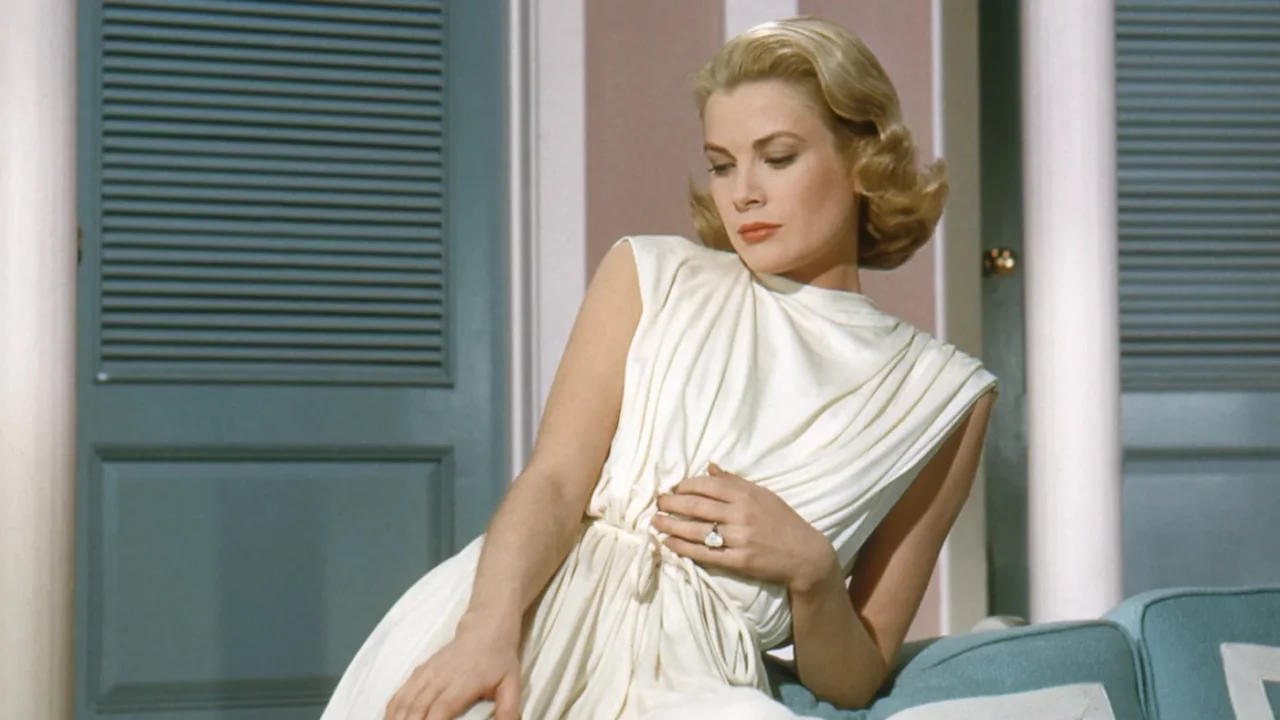
Unfolding is a remarkable montage of Hollywood history told through Cartier. Gloria Swanson appears in Sunset Boulevard (1950), wearing bracelets now displayed in the exhibition. There’s Grace Kelly in High Society (1956), followed by Mia Farrow in The Great Gatsby (1974) and Michael Douglas in Wall Street (1987). The journey continues through Arsène Lupin (2004) and Ocean’s 8 (2018), before arriving at Angelina Jolie portraying Maria Callas in Maria (2024) and a scene from Wes Anderson’s The Phoenician Scheme (2025).
Together, the montage charts more than seven decades of cinema history while illustrating how Cartier evolved from jeweller to the world’s royal houses into one of Hollywood’s most enduring co-stars.
“Hollywood became the new royalty,” explains Amanda Dunsmore, Senior Curator of Fashion and Textiles at the NGV and curator of the Melbourne presentation of the exhibition.
“Old money had less impact after the war and celebrities and Hollywood stars really came to the fore. It was huge for Cartier.”
The exhibition began life at London’s Victoria and Albert Museum before being reimagined for Melbourne. According to Dunsmore, the NGV presentation is considerably larger, with an expanded footprint allowing the gallery to include many more works and archival materials.
“We had to go out and source further loans,” she says. “And in doing that we expanded a number of aspects of the exhibition.”
Those additions include a greater focus on the landmark 1925 Paris International Exhibition, an expanded section devoted to legendary Cartier creative director Jeanne Toussaint, and a wealth of archival material revealing how the jewels were conceived, documented and produced.
Design sketches, notebooks, photographs, plaster casts and working documents transform the exhibition from a display of luxury objects into a portrait of artistic creativity.
“We really wanted to give people an insight into the making of these jewels,” Dunsmore says. “To understand how they were conceived, documented and realised.”
Drawing on influences from Ancient Egypt, India, the Middle East and Asia, the exhibition demonstrates Cartier’s extraordinary global reach.
Jacques Cartier’s journeys to India in the early twentieth century proved especially significant. His relationships with the maharajas eventually led to some of the company’s most celebrated commissions, including work for the Maharaja of Patiala, who entrusted Cartier with vast collections of gemstones to redesign in a modern style.
You’re reminded that while royalty established Cartier’s reputation, cinema would ultimately ensure its legend.
Grace Kelly occupies a particularly important place in the story. Several pieces displayed in the exhibition date from the years after she married Prince Rainier III and became Princess Grace of Monaco.
Remarkably, some of the jewels on display also appeared on screen.
Dunsmore points to footage filmed in the early 1960s in which Kelly introduces Monaco to an American audience.
“She’s wearing some of those beautiful jewels and necklaces that are in the case in the gallery,” Dunsmore says.
The relationship between Hollywood and Cartier stretches back further than many people realise.
Rudolph Valentino famously wore his Cartier Tank watch in the 1926 silent film The Son of the Sheik. According to Dunsmore, the actor refused to remove the watch despite it being historically inaccurate for the period setting.
“It’s completely out of context chronologically,” she says, “but he left his watch on.”
The result may have been accidental, but it marked one of cinema’s earliest examples of luxury product placement.
By the second half of the twentieth century, however, the relationship had become increasingly deliberate. Film stars wore their own Cartier jewellery on screen, while the company also created pieces specifically for movies.
One of the exhibition’s most fascinating objects is a recreation of a legendary diamond necklace originally made for an Indian maharaja. The original disappeared, most likely during the upheavals surrounding Partition, but Cartier retained its designs and documentation.
Those records allowed the company to recreate the necklace for the 2018 film Ocean’s 8, where it was worn by Anne Hathaway.
“It was sized down slightly to fit Anne Hathaway’s neck,” Dunsmore explains. “It was made completely with cubic zirconia.”
The necklace demonstrates how cinema continues to breathe new life into Cartier’s history.
For Dunsmore, the enduring appeal of the exhibition lies partly in the exceptional craftsmanship and partly in the stories attached to these objects.
“When do you see almost 400 jewels together in one space?” she asks.
These jewels have survived wars, changing fashions, the decline of aristocracy and the rise of celebrity culture. They have adorned queens, maharajas, princesses and movie stars, their stories moving effortlessly from Paris salons to Hollywood soundstages.
Visitors leave carrying more than memories of extraordinary jewels. They leave with a century of glamour — and the realisation that somewhere between royalty and the silver screen, Cartier became part of popular culture itself.
The Cartier exhibition continues at NGV International until 4 October, with the final month of NGV Friday Nights offering screenings of Maria, live performances by the Melbourne Symphony Orchestra and Melbourne Opera, and after-hours access to one of the year’s most acclaimed exhibitions. The show brings together almost 400 Cartier jewels and objects, including pieces worn by Elizabeth Taylor, Grace Kelly, Princess Margaret, Rihanna and the Duchess of Windsor.