

David Bowie at 10: The Artist Who Refused to Stay in One Frame
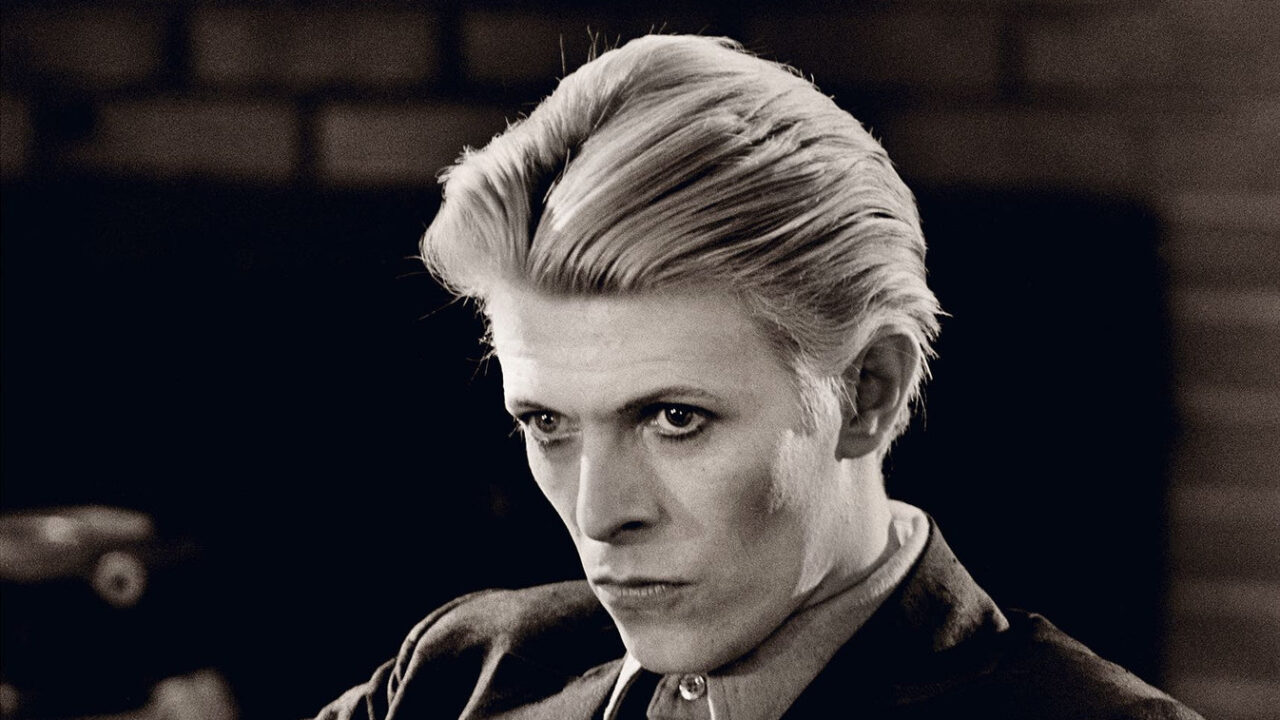
Ten years after his death, David Bowie remains one of the few modern artists whose influence still feels active rather than archival. Not preserved behind glass, not flattened into nostalgia, Bowie continues to move through culture as something closer to a working idea — a blueprint for how to live creatively without settling into a single identity.
While his musical legacy remains vast and unassailable, Bowie’s parallel career as a film actor has also taken on new resonance in the decade since his passing. Seen together, his work in music and film reveals a singular throughline: an artist instinctively drawn to characters on the edge of transformation, power and alienation — figures who, like Bowie himself, existed slightly out of time.
Bowie never approached acting as a vanity project or celebrity sideline. He treated it as another mode of authorship.
His first major screen role, as the extraterrestrial title character in Nicolas Roeg’s The Man Who Fell to Earth (1976), remains one of the most indelible performances of the era. Bowie’s casting felt less like a choice than a recognition: he didn’t play an alien so much as inhabit one. With his brittle physicality, watchful eyes and emotional opacity, Bowie created a character defined by dislocation — an echo of the personas he was simultaneously exploring in his music.
That sense of estrangement ran through his film work. Whether portraying the fragile POW Lawrence in Merry Christmas, Mr. Lawrence (1983), the seductive, predatory vampire in The Hunger (1983), or the Goblin King Jareth in Labyrinth (1986), Bowie gravitated toward figures who exerted control while remaining emotionally unreachable. These were not naturalistic performances in the traditional sense; they were constructed, stylised, self-aware. Like his music, they refused realism in favour of myth.
Hollywood struggled at times to know what to do with him. Bowie declined conventional leading-man trajectories, turning down roles that might have made him a safer box-office proposition. Instead, he chose projects that intrigued him aesthetically or philosophically. His Pontius Pilate in Martin Scorsese’s The Last Temptation of Christ (1988) was quiet, unsettling and stripped of grandeur. His turn as Andy Warhol in Basquiat (1996) was eerily restrained, built around stillness rather than caricature. Bowie understood that Warhol, like himself, was a mirror as much as a personality.
If Bowie’s acting career never followed a predictable arc, it was because predictability held no interest for him. The same instinct governed his music.
By the time of his death in January 2016, Bowie had already completed his most audacious final act. Blackstar, released two days before he died, was not a farewell album in any conventional sense. It was a work of deliberate ambiguity, merging jazz, avant-garde textures and cryptic lyrics into something closer to a cinematic experience than a pop record. The album didn’t explain itself; it demanded interpretation. In doing so, Bowie ensured that even his exit would resist closure.
That refusal to resolve meaning has become central to his posthumous legacy. Bowie was not an artist who offered answers. He offered possibilities.
Throughout his career, he used music and performance to test ideas about identity long before those conversations entered the mainstream. Gender, sexuality, fame, mortality — Bowie treated them as materials rather than declarations. Ziggy Stardust wasn’t simply a character; he was a prototype for the modern pop persona. The Thin White Duke wasn’t an alter ego so much as a warning. Later works, from Outside to The Next Day, examined surveillance, memory and aging with an eye that felt increasingly cinematic.
In that sense, Bowie’s final decade feels especially prescient. His return to acting in Christopher Nolan’s The Prestige(2006), as Nikola Tesla, cast him as a visionary haunted by the cost of invention.
Ten years on, Bowie’s influence persists not through imitation but through permission. Contemporary artists cite him less as a sound to replicate than as an approach to creative life. He demonstrated that reinvention need not be reactive, that aging could be interrogated rather than disguised, and that commercial success did not require artistic stasis.
Crucially, Bowie also understood when to step away. He left the stage in 2006 without ceremony, retreating from public life while continuing to work privately. When he returned, it was on his own terms — not to relive past glories, but to advance the conversation.
That discipline, rare in both music and film, is perhaps his most enduring lesson.
A decade after his death, Bowie remains uncannily present — not as a frozen icon, but as a living influence across music, cinema, fashion and art. He didn’t just cross mediums; he dissolved the boundaries between them.
David Bowie didn’t want to be remembered as a star. He wanted to be remembered as an idea in motion.
Ten years on, that motion continues.
Mitchell Peters