
‘Steal This Story, Please!’ Wins Adelaide Film Festival Change Award as 2026 Edition Sets Ticket Sales Record
The documentary about journalist Amy Goodman claimed the festival’s $5,000 Change Award, while Lizzie Cater’s ‘Baby Talk’ won Best Short Film.
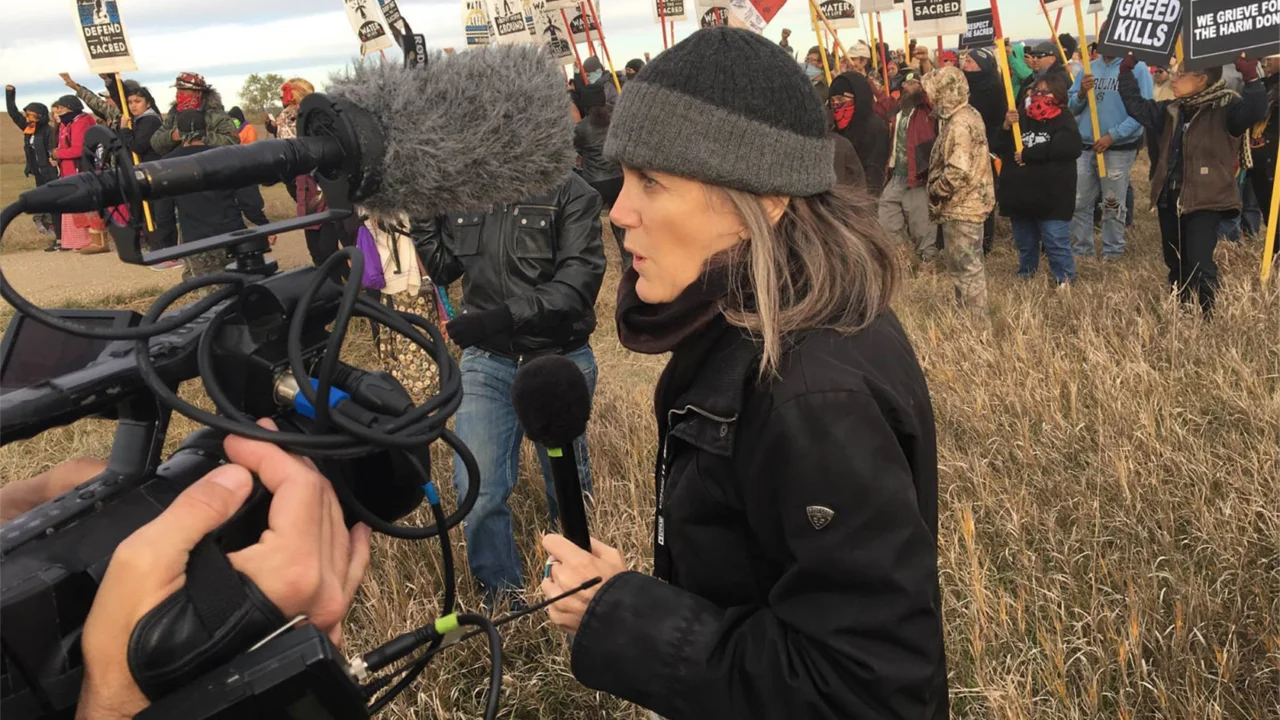
Adelaide Film Festival has awarded its 2026 Change Award to Steal This Story, Please!, the documentary about American journalist and Democracy Now! founder Amy Goodman, as organisers revealed that this year’s festival achieved record ticket sales.
Directed by Carl Deal and Tia Lessin, Steal This Story, Please! received the $5,000 prize, which recognises films exploring positive social or environmental impact and new directions for humanity.
Established in 2020, the Change Award celebrates cinema that challenges conventional thinking and encourages audiences to engage with pressing global issues.
In announcing the winner, the jury praised the documentary’s examination of independent journalism and Goodman’s commitment to reporting on stories frequently overlooked by mainstream media.
“Our information environment has never been more contested, captured by political and economic interests, and consequential for the health of people and planet,” the jury said.
The jury described the film as a demonstration of “the power of critique, exposure of injustice, the importance of independent media and how much it needs our support.”
Accepting the award, Deal and Lessin highlighted the importance of independent journalism at a time of increasing political pressure on the media.
“It is a true honour to have our film recognised with the Change Award,” the filmmakers said. “Thank you Adelaide Film Festival for celebrating meaningful impact of art and truth.”
They added: “At a time when the president of the United States has labelled the press ‘the enemy of the people’, this is a critical time to encourage dissent, truth telling, and art that disrupts.”
The Change Award jury, comprising Professor Ariella Helfgott, writer and researcher Dr Jared Thomas and arts curator Emma Webb OAM, also awarded a Special Commendation to Sara Dosa’s Time and Water, a documentary exploring Iceland’s disappearing glaciers and the relationship between environmental destruction, grief and collective responsibility.
Meanwhile, Lizzie Cater’s Baby Talk won the festival’s $3,000 Short Film Award, with the jury praising its performances and exploration of love, family and societal expectations.
“Baby Talk was chosen as best short film because of the clever and gradual reveal of the themes and the lasting impact of the visual language,” the jury said.
“The performances from the cast are exceptional and drive an unexpectedly moving story of love, family, societal expectation and the courage required to honour one’s own truth.”
Cater welcomed the recognition, particularly its significance for emerging LGBTQ+ filmmakers.
“As an emerging Queer filmmaker it means so much to have stories from our community platformed, let alone win,” she said.
The Short Film Award jury comprised filmmaker Travis Akbar, director Alies Sluiter and actor and filmmaker Anna Lindner.
The awards announcements followed the festival’s Closing Night Gala screening of Matthew Bate’s Hell Has No Fire Escape, with organisers confirming that the 2026 edition had achieved record ticket sales.
Numerous screenings sold out during the festival, including five sessions of the South Australian production Kumarangk: Sacred Women’s Business.
The festival also highlighted a resurgence in filmmaking by South Australian directors, several of whom have received support through the Adelaide Film Festival Investment Fund.
Local productions featured in the program included Bate’s Hell Has No Fire Escape, Anthony Maras’ Hollywood debut Pressure, Jared Nicholson’s Aftermath, Ursula Dabrowsky’s Ruby Ruby and Johanis Lyons-Reid’s Lucrum.
Adelaide Film Festival CEO and creative director Mat Kesting said the record attendance reflected growing enthusiasm for local filmmaking.
“It fills me with immense pride to see this new generation of brilliant South Australian storytellers celebrated at the Adelaide Film Festival by cinemas filled with enthusiastic audiences,” Kesting said.
“I’m proud of the contribution the AFFIF has made in creating opportunities for local filmmakers, including First Nations filmmakers, and in strengthening our industry.”
First Nations storytelling was another major focus of the 2026 program, with filmmaking teams behind Kumarangk: Sacred Women’s Business, Lucrum, Manjutji and Bukal Bukal attending the festival.
The event also recognised actor and filmmaker Leah Purcell AM with the Don Dunstan Award, while Karina Lester received the Bettison James Award.
The latest announcements complete the festival’s major competition results, following the earlier presentation of the Feature Fiction Award to South African director John Trengove’s The Smell of Apples and the Feature Documentary Award to The Balkan Cowboy, directed by Dublin-based Croatian filmmaker and visual artist Dragan Jurišić.
Special Mentions were awarded to Aung Phyoe’s Fruit Gathering in the Feature Fiction category and Afsaneh Salari’s Tehran, Under the Skin in Feature Documentary.
The feature competition jury included Toronto International Film Festival CEO Cameron Bailey, Australian actor Xavier Samuel, Malaysian filmmaker Sandeep Ray, actor and filmmaker Tilda Cobham-Hervey and producer Anna Vincent.
Adelaide Film Festival will conclude its 2026 program with encore screenings from October 27–29, including repeat presentations of Wild Horse Nine, The Man I Love, Kumarangk: Sacred Women’s Business, Fatherland, How to Feed a Dictator and All of a Sudden.
Further details are available through the festival’s official website.