
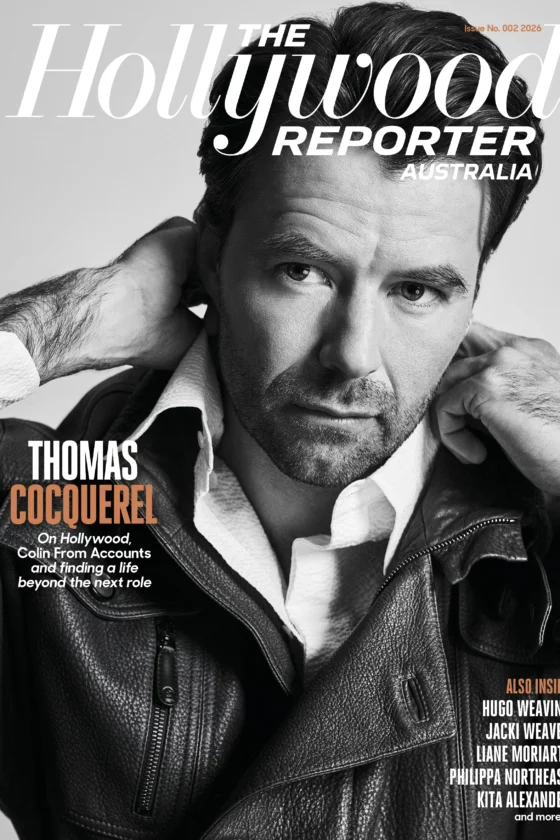
Thomas Cocquerel on Coming Home, ‘Colin From Accounts’ and Finding a Life Beyond the Next Role
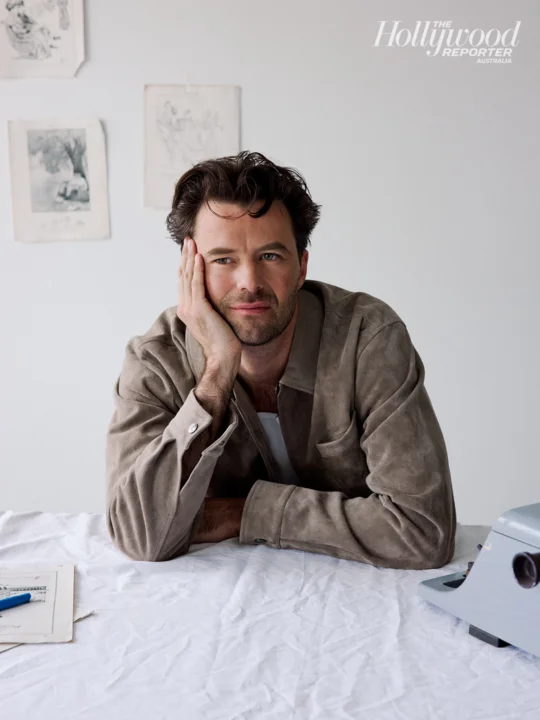
The Australian actor reflects on navigating Hollywood, the intimacy inside a massive period production, joining Colin From Accounts and why success now extends far beyond the screen.
For Thomas Cocquerel, success used to be measured almost entirely in roles.
“When I was young, I felt like my career was everything,” the Sydney-born actor says. “The older I get, the more I realise I want it to be part of something bigger: my relationships, my idea of home and the impact I have on those around me.”
It is a perspective shaped by more than a decade spent moving between Australian and American productions. Since graduating from Sydney’s National Institute of Dramatic Art (NIDA) in 2012, Cocquerel has built a career encompassing local television, independent film and large-scale international drama.
Early appearances in Love Child and Anzac Girls led to his international feature debut in Kidnapping Mr. Heineken, alongside Anthony Hopkins and Sam Worthington. His subsequent credits have included Red Dog: True Blue, OtherLife, In Like Flynn, Celeste, Safe Home, Paper Dolls and The Gilded Age.
In some respects, the career that followed is the one Cocquerel imagined when he left NIDA.
“I always knew I wanted to travel, work in different countries and work with actors I admired, and I’ve been pretty lucky to do just that,” Cocquerel recalls.
The landscape surrounding that ambition, however, has shifted dramatically. Streaming transformed the business; the pandemic shut down production; and the Hollywood strikes forced another period of uncertainty. Cocquerel’s own priorities changed with it.
“I’m now more focused on not just building a career, but also a good life around it. Moving back to Australia, I’m spending more time with the people I love and having a healthy lifestyle, while still staying versatile, curious and open to where the industry is heading. Being able to adapt and move with the changes is really important.”
Cocquerel’s relationship with the United States predates his acting career. He lived in Los Angeles and Houston for almost eight years as a child and decided after drama school to return.
“I’ve loved my time in the US, and it’s become an important part of my life and career, with a lot of good memories and close friends,” he adds. “That said, Australia has always been home.”
Crossing between the two industries has given Cocquerel a keen sense of where he feels most comfortable. On a set, belonging has rarely been a problem, provided he has done the necessary work.
“There’s so much rejection in this job that, when you land something exciting, belonging doesn’t feel like the hard part. It comes from trusting I’ve earned my place in the room, whatever happens once I’m there.”
The industry’s more ceremonial spaces can be another matter. Cocquerel attended the Golden Globes this year, an experience he describes as both extraordinary and slightly surreal.
“It’s the other rooms, the carpets and the functions, where that feeling can be more gradual. In a room that impressive, I don’t know if I felt like I belonged that day, but I can tell you I was bloody happy to be there.”
That lack of pretension is, Cocquerel believes, part of the reason Australian performers travel so well.
“We’re encouraged to take the work seriously without taking ourselves too seriously, which is invaluable,” he explains. “With or without formal training, we’re a relatively small industry that has produced some extraordinary actors and filmmakers. Aussies have a natural resilience and resourcefulness that translates very well internationally. It’s a tough gig, and I think it’s that ‘dust yourself off and get on with it’ attitude that serves us well.”
Few jobs have demonstrated the contrast between scale and simplicity as vividly as The Gilded Age. One day at Central Park’s Bethesda Fountain placed Cocquerel among hundreds of performers in period costume. It was a spectacle that could easily have overwhelmed the scene at its centre.
“I’d never seen anything like it before,” he recalls. “But before I could let it overwhelm me, the camera was rolling and we were doing this really cute, intimate scene.”
The experience reinforced something fundamental about screen acting.
“You think of these huge sets as somehow feeling louder or more daunting, but in reality it’s still just you and the other actor or actors,” he continues. “When you’re surrounded by enormous sets and hundreds of people, it’s easy to feel like you need to rise to the occasion. But the opposite is true. The more extraordinary the world around you becomes, the more important it is to stay grounded and keep it small.”
That same principle applies when Cocquerel moves from an elaborately mounted American period drama to a distinctly Australian production. The scale and working speed may change, but his approach does not.
“I’m still trying to understand who the person is, what they want and what’s happening in their world,” he adds. “The speed at which you have to work can affect the risks you take and how much you get to explore that world. But that can be valuable, too. It can make the work more instinctive and exciting.”
Recent Australian projects have included Safe Home, Paper Dolls and Colin From Accounts. Cocquerel is proud of their cultural specificity, but rejects the idea that it limits their reach.
“I love that our shows can feel completely specific to this country and still connect with audiences around the world.”
He was particularly struck by creators and stars Harriet Dyer and Patrick Brammall resisting the label of “Australian comedy” for Colin From Accounts and describing it simply as a comedy.
“I thought, how cool. What a great distinction. Our voices do echo internationally, and we should be more conscious of it.”
Joining the series for its final season also allowed him to reveal a side of his work that audiences have rarely seen. Despite his background in comedy theatre and improvisation, Cocquerel has more often been cast in romance, period drama and darker material.
“At the moment, comedy is what I’d love to do more of. Coming from a comedy theatre and improv background, it’s still hard to tell people you want to do comedy without getting the chance to prove yourself.”
His Colin From Accounts character provided precisely that opportunity.
“The role was such a gift because it allowed me to explore a character who was low-status, a little daft and odd, but also really sweet and kind, with a big heart,” he adds. “It was a lot of fun, and I’d love to do more.”
Cocquerel once imagined he might become a director and remains open to eventually moving behind the camera. If not, he jokes, perhaps there is still a travel show in his future. For now, however, his ambitions are balanced by an increasing awareness of time and where he wants to spend it.
“I value time more, and spending it with the people I care about,” he reflects. “I also value not stressing as much and being able to enjoy things more. I think you appreciate things more as you get older.”
Friends and family keep him grounded when the work becomes busy or unpredictable. So does a farm a few hours outside Sydney, where the demands of the industry recede quickly.
“It’s hard not to feel grounded when you’re offline and getting your hands dirty.”
Ask Cocquerel what a good life looks like now and the answer contains professional ambition, but is no longer defined by it.
“Work that I’m proud of, with people I love around me, good health, a home that feels like home and is always full of laughter. And being a good person along the way.”