
Chloe Zhao on Creativity, Ritual and Why Modern Life Has Lost Its Soul
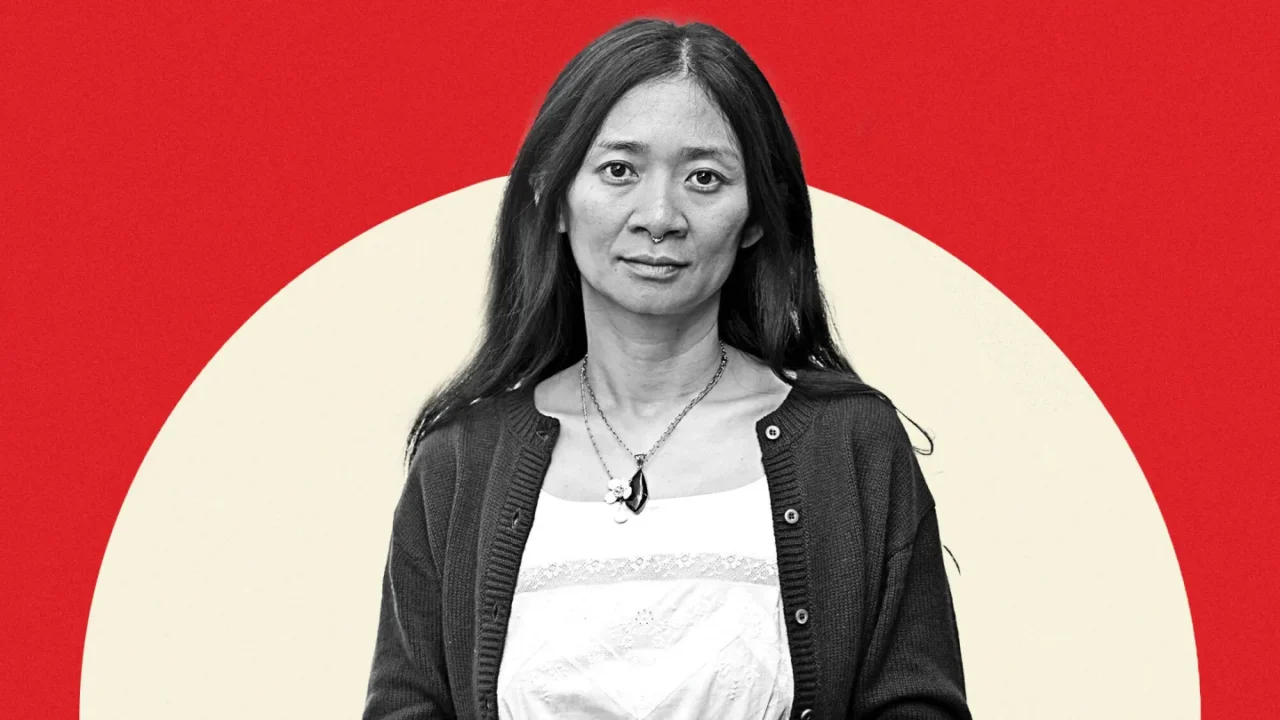
At this year’s Vivid Sydney, filmmaker Chloé Zhao didn’t so much give a masterclass as open a spiritual doorway.
Over the course of nearly an hour, the Oscar-winning director of Hamnet, Nomadland, The Rider and Eternals spoke about creativity, grief, death, ritual, synchronicity, burnout and the dangers of living entirely inside the rational mind. Sitting before a captivated Sydney audience, Zhao’s thoughts spiralled outward in long, searching answers that felt less like industry conversation and more like philosophy in motion.
For Zhao, creativity isn’t simply a profession. It’s essential to her being.
“In my 40s,” she told the sold-out audience, “I started trying to understand why the compulsion to create in me was so strong, even as a child. Why it sometimes felt more important than food or sleep.”
Her answer eventually led her far beyond film schools and studio systems. Zhao spoke passionately about Indigenous ritual, communal storytelling and the idea that art once belonged to everyone, not just professional artists.
“The act of creativity is not really a job,” she explained. “It became something we choose to do for a living, but in older days it was ritualistic and ceremonial. It belonged to the whole tribe.”
Drawing from experiences she’d had on Lakota reservations witnessing Sun Dance ceremonies, Zhao described storytelling as something collective rather than hierarchical. In those ceremonies, she said, the “director,” “performer” and “audience” are not separated.
“They were moving as one,” she said. “The ceremony wasn’t coming from one person’s mind sitting in an office writing on a MacBook Pro. Everyone was embodying it together.”
The point wasn’t abstract spirituality. Zhao believes modern society has stripped people of communal rituals that once helped process grief, fear, trauma and transformation.
“There’s this huge spiritual hunger,” she said. “These rituals were taken from us individually and collectively.”
For Zhao, filmmaking became a substitute for that missing spiritual architecture.
She spoke candidly about a difficult childhood and how creativity became the only mechanism she had to process life emotionally.
“I didn’t have religion or spirituality growing up,” she said. “All I had was my own creativity.”
That emotional openness runs directly into her filmmaking process, one built less on rigid control than intuition and surrender.
“I’m trying very hard,” Zhao explained, “to let mystery guide us half the time.”
That idea, mystery over certainty, became a recurring theme throughout the conversation. Zhao repeatedly pushed back against modern culture’s obsession with logic, productivity and linear thinking. She believes creativity lives somewhere less tangible.
“When logic and rationality become the definitive truth,” she said, “we lose connection to inspiration, to something bigger.”
She illustrated the point with a devastating story from childhood. As a young girl, Zhao loved to sing until a humiliating moment during a school singing competition permanently altered her relationship to her own voice.
“A boy looked at me and said, ‘I wish you died,’” she recalled. “I stopped singing from that day on. I even lowered my speaking voice.”
Only recently, she said, has she begun reclaiming that lost part of herself.
The conversation inevitably turned toward Hollywood and the challenge of preserving artistic instinct inside a commercial system. Zhao acknowledged the contradiction directly.
“It’s incredibly difficult,” she admitted.
Her solution has been radical pragmatism. Zhao deliberately kept her early films tiny, shooting her first features for roughly $80,000 and $100,000 with skeletal crews.
“You can’t say you want complete freedom and then ask for $20 million,” she said.
That philosophy extended even to Nomadland. After the success of Three Billboards Outside Ebbing, Missouri elevated Frances McDormand’s commercial value, Zhao approached Searchlight with a practical question.
“How much money can you give me where, if I make no money back, you’ll still be okay?” she recalled asking.
The answer was $5 million.
“I said, ‘I’ll take it.’”
Zhao’s comments about McDormand revealed much about her collaborative instincts. She described nonprofessional actors as naturally possessing “presence”, while professional actors spend their careers trying to recover it. Yet she also understood the practical necessity of McDormand anchoring the film.
“Without Frances, who’s going to watch Nomadland?”
Throughout the discussion, Zhao repeatedly returned to the body as a creative compass. She described using physical sensation almost as an intuitive radar system while directing.
“When something is wrong,” she explained, “I feel tightness in the back of my neck, in my chest.”
Over time she has learned to trust those sensations more than intellectual analysis.
“Every time I ignored that feeling and pushed forward anyway,” she said, “it became a failure.”
That trust in intuition has led Zhao deep into dream work, somatic practice, tarot, Jungian psychology and ritual-based creative exercises. At one point she joked that she now trusts tarot cards more than her own overthinking brain.
“My brain is tiny,” she laughed. “And it’s easily manipulated by my phone.”
Her filmmaking sets increasingly reflect those philosophies. Zhao described creating environments where cast and crew function more like interconnected ecosystems than conventional hierarchies. She spoke about dream facilitators leading hundreds of extras through somatic exercises before filming scenes, and about trying to erase boundaries between director, actor and audience.
“My job,” she said, “is to make sure the ecosystem works.”
The most emotionally resonant section of the conversation arrived when Zhao discussed burnout, rest and what she called “wintering.” After making several films back-to-back, Zhao said she experienced a four-year creative depletion.
“I was a barren field,” she admitted.
Rather than resisting that emptiness, she has gradually learned to see it as necessary.
“The winter is important,” she said. “If winter doesn’t kill everything, you don’t get summer.”
Zhao believes modern society pathologises these quieter periods of retreat and inwardness. Depression, exhaustion and grief are often treated as failures instead of natural cycles.
“We’re taught to keep going,” she said. “More, more, more.”
Instead, Zhao advocates rest, sleep, journaling, nature and silence. During her current Australian stay, she abandoned an ambitious travel itinerary in favour of listening to what her body actually needed.
“Maybe I just need to sleep and look at koalas,” she smiled.
Perhaps the most revealing moment came when Zhao discussed training as a death doula. Fascinated by humanity’s fear of dying, particularly in Western culture, she began studying how different cultures approach death rituals and impermanence.
Part of that research involved examining Australian Indigenous traditions surrounding death and community grieving practices.
“There are other ways,” she said softly, reflecting on the hyper-medicalisation of dying. “More human ways.”
By the end of the session, Zhao seemed less interested in conquering Hollywood than transcending its limitations entirely. She hinted that her next step may involve theatre, where the line between performer and audience becomes even more immediate and ritualistic.
“I feel like I’ve explored as far as I can inside cinema right now,” she said.
The statement hung in the room like a challenge, not just to herself, but to anyone trying to make art in an overstimulated world increasingly disconnected from stillness, intuition and mystery.
For Zhao, the future of storytelling may ultimately depend on recovering something ancient that modern life forgot.