
An Overnight Success Years In The Making
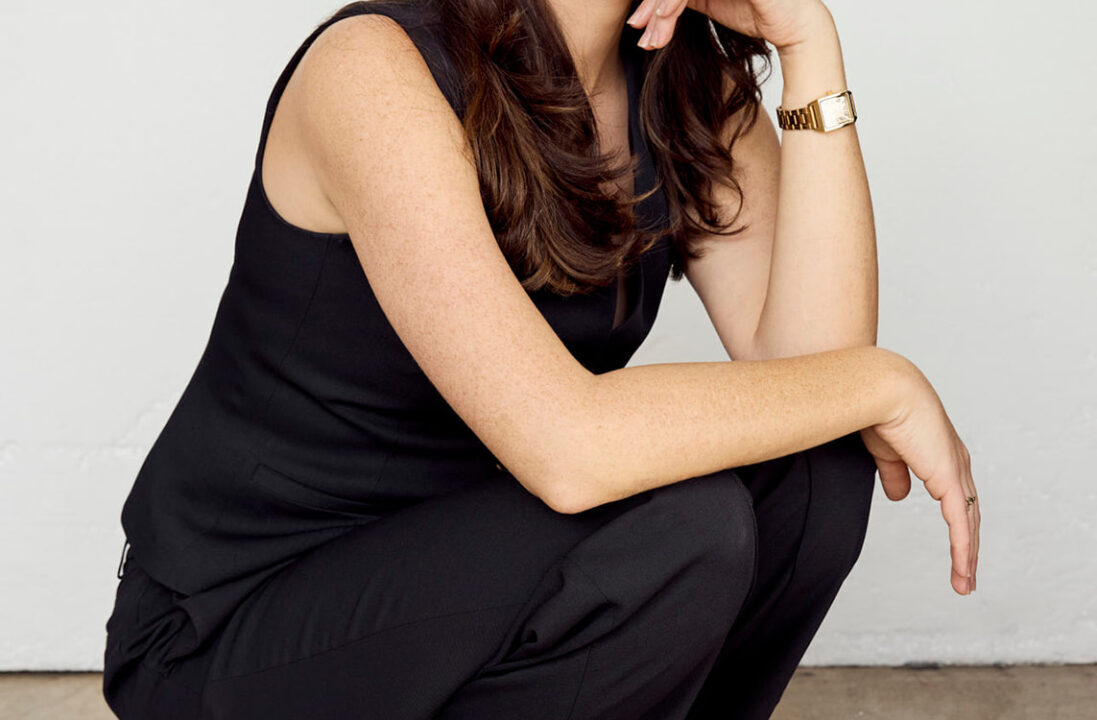
Sitting down with Tropfest and Flickerfest winner Lianne Mackessy
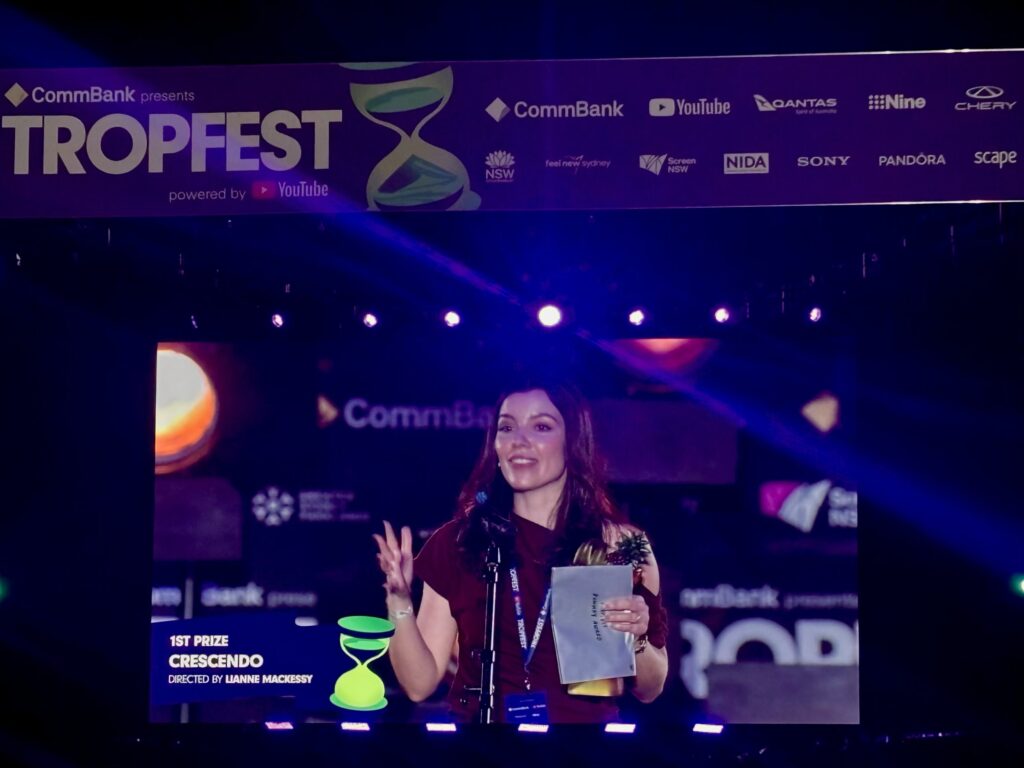
When Lianne Mackessy stepped onto the stage to accept her Tropfest award from Oscar nominee Margot Robbie earlier this year, the moment looked like the kind of overnight success story the film industry loves to celebrate.
By then however, Mackessy had already spent years quietly building toward it.
The filmmaker behind the acclaimed short films Tuesday Tuesday and Crescendo has emerged as one of Australia’s most exciting new creative voices, collecting major festival wins, industry attention and international momentum at remarkable speed. Since her Tropfest and Flickerfest victories, Mackessy has secured U.S. management, stepped into meetings with major production companies and found doors opening that can often take filmmakers years to unlock.
Yet when asked about the sudden spotlight now surrounding her career, Mackessy remains notably grounded.
“It’s been a big whirlwind,” she says. “I’m really grateful. It’s opened a lot of doors.”
Importantly, she rejects the idea that any of it happened overnight.
“It’s been so many years of hard work and craft development,” she explains. “Success is going to happen when you’ve got the discipline and the drive and the patience and focus.”
That calm sense of perspective seems to define Mackessy as much as the awards themselves. Even amid the glamour and acceleration of the past 12 months, she speaks less about career momentum than the work itself and the people around it.
“When you’re accepting an award for a film, there’s so many people that have created it with you,” she says. “It’s about a team and about a story.”
Growing up in Albury in regional New South Wales, Mackessy’s path into filmmaking was far from conventional. Like many creatives outside Australia’s major production centres, she was drawn to storytelling long before she fully understood how a life in the industry might actually look.
“I always wanted to be connected to story somehow, and my way was through acting,” she says.
As her career developed however, Mackessy found herself facing the same frustrations experienced by countless emerging actors: waiting for auditions, waiting for opportunities and waiting for somebody else to say yes.
Eventually, she stopped waiting.
“I got so sick of that,” she says. “I wanted to create my own opportunities.”
What initially began as a practical solution quickly evolved into something much deeper. Acting led to writing, writing led to directing and directing eventually opened the door to a much broader understanding of filmmaking itself.
“As I developed my craft and learned more, I really just loved the side of writing,” she explains. “Then I learnt directing. Then I just fell in love with filmmaking.”
Today, Mackessy describes herself as a “holistic storyteller” — a filmmaker shaped equally by performance, writing and directing. Alongside her acting training, she later completed a master’s degree in directing, developing a creative foundation that allows her to approach story from multiple perspectives.
That layered understanding of people and emotion was also shaped well outside the film industry.
Before filmmaking became her primary focus, Mackessy worked in disability support and with the Salvation Army supporting homeless youth. Those experiences continue to deeply inform both the stories she tells and the empathy with which she approaches them.
Tuesday Tuesday, one of her most acclaimed works to date, emerged partly from her experiences supporting people living with younger-onset dementia.
For Mackessy, authenticity in storytelling is non-negotiable.
“I would never write on behalf of somebody else’s experience,” she says. “Nothing about us without us.”
It’s a philosophy that speaks to her broader approach as a filmmaker — one grounded less in observation than lived understanding.
“I think it teaches you about being present,” she says of her years in support work. “And about empathy.”
Those ideas continue to shape the kinds of stories she believes Australian film and television still needs to tell.
While conversations around diversity and representation have become increasingly prominent within the screen industry, Mackessy believes one important area remains underexplored.
“I think class is not spoken about enough,” she says.
Having grown up in a working-class environment herself, Mackessy believes there is often a disconnect between the stories appearing on screen and the people creating them behind the scenes.
“We see a lot of working-class stories and there’s not a lot of working-class people making the stories,” she says. “Sometimes you can clearly see on screen that they haven’t walked in the shoes of someone doing that.”
It’s an observation that feels especially relevant at a time when the Australian industry continues to examine questions surrounding authenticity, access and representation.
For Mackessy, meaningful representation extends far beyond casting. It’s also about who is developing, shaping and authoring the stories audiences ultimately see.
Another recurring theme throughout Mackessy’s career has been visualisation. Long before standing on stage accepting awards, she had already imagined those moments countless times in her mind.
“I’m big on visualisation,” she says. “I kind of see a lot of it before. I see it while I’m in the process of development. So then when it happens, I’m like, I’ve lived this hundreds of times.”
Even now, however, Mackessy seems far more interested in what comes next than reflecting too heavily on what has already happened.
Over the past year she has completed a television pitch and begun developing a feature film alongside her newly secured U.S. management team. Later this year, she will travel to Los Angeles as part of the Tropfest and Motion Picture Association accelerator program — another significant step forward for a filmmaker whose momentum continues to build internationally.
For someone who admits she doesn’t particularly enjoy standing still, the movement feels natural.
After a remarkable year that brought both Tropfest and Flickerfest success, Lianne Mackessy is already focused on the next story.