
‘The Beatles Anthology’ Returns on Disney+, Still the Gold Standard of Music Documentary Storytelling
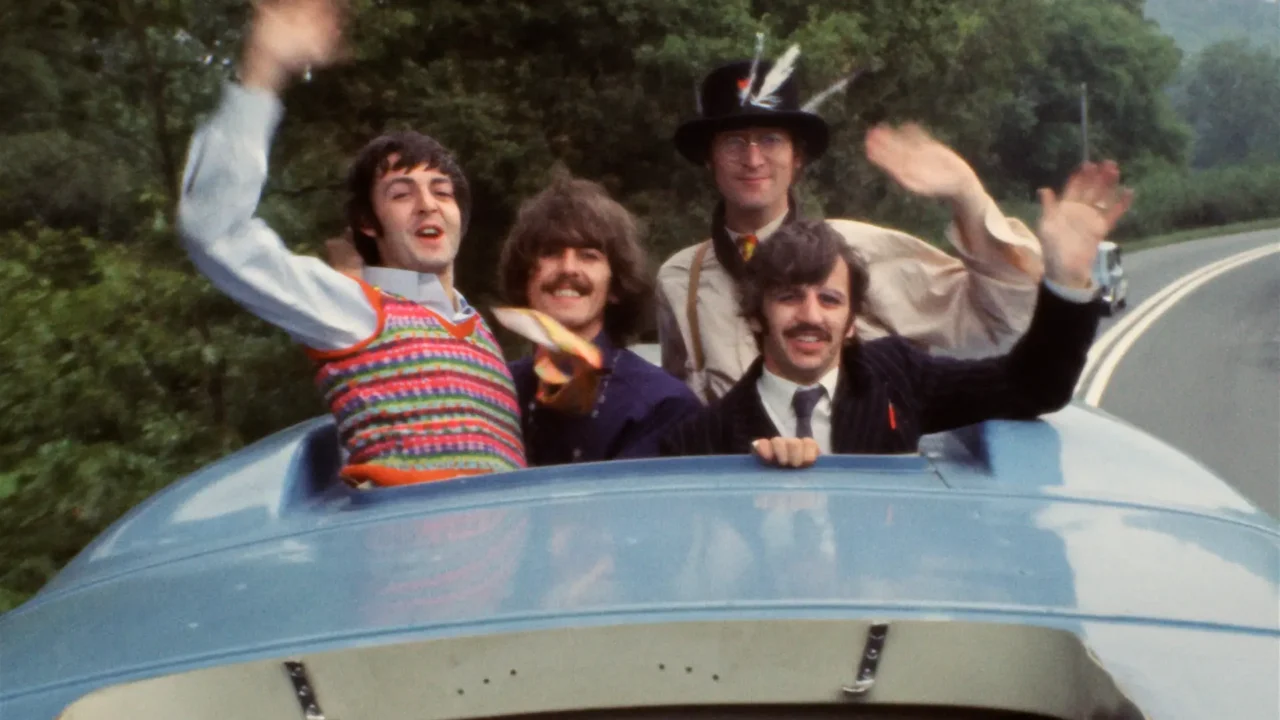
In the fall of 1995, The Beatles did something no legacy act had managed before: they reclaimed prime-time television.
Across multiple nights, families gathered around network TV as if it were 1964 again. VCRs were programmed. Watercooler conversations followed. And a brand-new Beatles song, “Free As a Bird”—built from a John Lennon demo and completed by Paul McCartney, George Harrison and Ringo Starr—premiered as both a cultural event and a statement of intent.
That moment served as the entry point to something larger and more ambitious: The Beatles Anthology, an eight-part documentary series that didn’t merely revisit the band’s history, but fundamentally reshaped how music documentaries could be structured, marketed and received.
Now, three decades later, Anthology has returned in a newly restored and recut version on Disney+, expanded to nine episodes. Despite the explosion of music documentaries since its debut, it remains the most comprehensive—and influential—screen account of The Beatles’ story, even as it openly acknowledges the impossibility of any “definitive” version.
A Franchise Built From First-Person Memory
Anthology begins, as it always has, in black-and-white wartime Liverpool and concludes in a world transformed by the cultural revolutions of the 1960s. The journey moves through Hamburg, London, the United States and India, tracing the band’s ascent from club act to global phenomenon.
What distinguishes Anthology, however, is not its scope but its point of view. Eschewing a traditional narrator or academic framing, the series is told almost entirely by the band members themselves—allowing contradictions, humour and emotional dissonance to coexist.
“You’ve heard it from everybody else,” Ringo Starr says early on. “Now you can hear it from us.”
At the time of its original broadcast, this approach quietly upended the rock documentary format. Rather than positioning The Beatles as a historical subject to be explained, Anthology treated them as active participants in the interpretation of their own legacy. That structural choice has since become standard practice across prestige music docs.
The series also launched what can now be understood as the modern phase of The Beatles’ content strategy: archival releases, remixes, restorations and narrative expansions that continue to drive engagement across generations and platforms.
From Abandoned Film to Cornerstone Project
The origins of Anthology date back to the early 1970s, when Apple Corps executive Neil Aspinall began assembling archival footage in the immediate aftermath of the band’s breakup. His rough-cut feature, titled The Long and Winding Road, contained no new interviews and was ultimately shelved—but it established the necessity of a comprehensive account.
The project remained dormant through the 1970s and 1980s as legal disputes, solo careers and, ultimately, John Lennon’s death reshaped the band’s future.
“When we got over our business troubles, we decided that we might do the definitive story of The Beatles,” Paul McCartney later explained. The key distinction, he realised, was perspective: an “inside-out” telling rather than an external analysis.
By the early 1990s, McCartney, Harrison and Starr were ready. New interviews were filmed with broadcaster Jools Holland, Lennon’s voice was incorporated through archival material, and key insiders—including Aspinall, producer George Martin and press officer Derek Taylor—added context. UK filmmakers Geoff Wonfor and Bob Smeaton expanded the material into an eight-part series that balanced myth with intimacy.
Timing the Cultural Reset
When Anthology premiered in the mid-1990s, The Beatles’ legacy had receded slightly from the cultural foreground, particularly in the UK. Still revered, they were no longer central to contemporary music discourse.
That changed quickly. The band’s psychedelic period had already begun to influence late-’80s and early-’90s dance culture. Artists such as Kurt Cobain openly cited The Beatles as foundational. Britpop acts—many born as the band was breaking up—were actively reasserting British pop lineage.
Anthology arrived at exactly the right moment, supported by the release of “Free As a Bird” and the first of three Anthology albums, which offered alternate takes and unreleased material that functioned as a parallel audio narrative.
For a band that had dissolved 25 years earlier, the effect was remarkable: The Beatles re-entered the present tense.
Restoration as Storytelling
The Disney+ version of Anthology underscores how central restoration has become to legacy storytelling.
Interviews filmed on 16mm in the 1990s were relatively straightforward to scan and enhance. The real challenge lay in the archival footage—material sourced globally, often believed to have been lost or downgraded to videotape.
As 2025 co-producer Martin R. Smith has noted, Apple Corps instead discovered that original film elements had largely survived, creating what he described as an “embarrassment of riches.”
Restoration work was handled by Peter Jackson’s Park Road Post in New Zealand, whose frame-by-frame approach preserves period texture while eliminating damage and distortion. The goal was not modernisation, but fidelity: retaining the visual identity of the 1960s while meeting contemporary broadcast standards.
Audio restoration followed a similar philosophy. Under the supervision of producer Giles Martin, machine-learning tools were used to separate music, dialogue and crowd noise—particularly on live recordings long obscured by poor source quality and audience hysteria. The result is a dramatic increase in clarity, mixed across Dolby Atmos, 5.1 and stereo.
Lennon’s archival interviews, often previously buried beneath ambient noise, now emerge with striking immediacy.
Recut for the Streaming Era
The new version of Anthology reflects not just technical updates, but editorial ones. The original episodes have been tightened to under an hour each, creating a stronger narrative rhythm for modern viewing habits. A new ninth episode serves as a coda, focusing on McCartney, Harrison and Starr reconvening in the 1990s to reflect on their shared history.
Narratively, the arc remains intact: early camaraderie, cultural explosion, creative breakthroughs, increasing pressure and eventual dissolution. Crucially, the series resists simplification. Conflicting memories are left unresolved. Emotional tensions coexist with humour and affection.
“We started off trying to make the definitive story,” McCartney admits in the new episode. “And we realised that it’s almost impossible.”
That refusal to impose a single version of events is perhaps Anthology’s most enduring strength.
Still the Benchmark
In an era of algorithm-driven nostalgia and short-form content, The Beatles Anthology remains unusually patient. It is long, dense and sometimes contradictory. It trusts its audience.
That trust has paid dividends. Thirty years on, Anthology still towers over subsequent Beatles projects—not because it explains everything, but because it allows the band’s humanity to coexist with the mythology.
As George Harrison once observed during its original production: “The Beatles exist without us.”
The Disney+ release makes clear that the story continues to evolve—reframed by technology, audience and context—but the core remains intact.
The Beatles Anthology is now streaming on Disney+.
Mitchell Peters